
Pineapple Fried Rice Flavorful and Easy Recipe
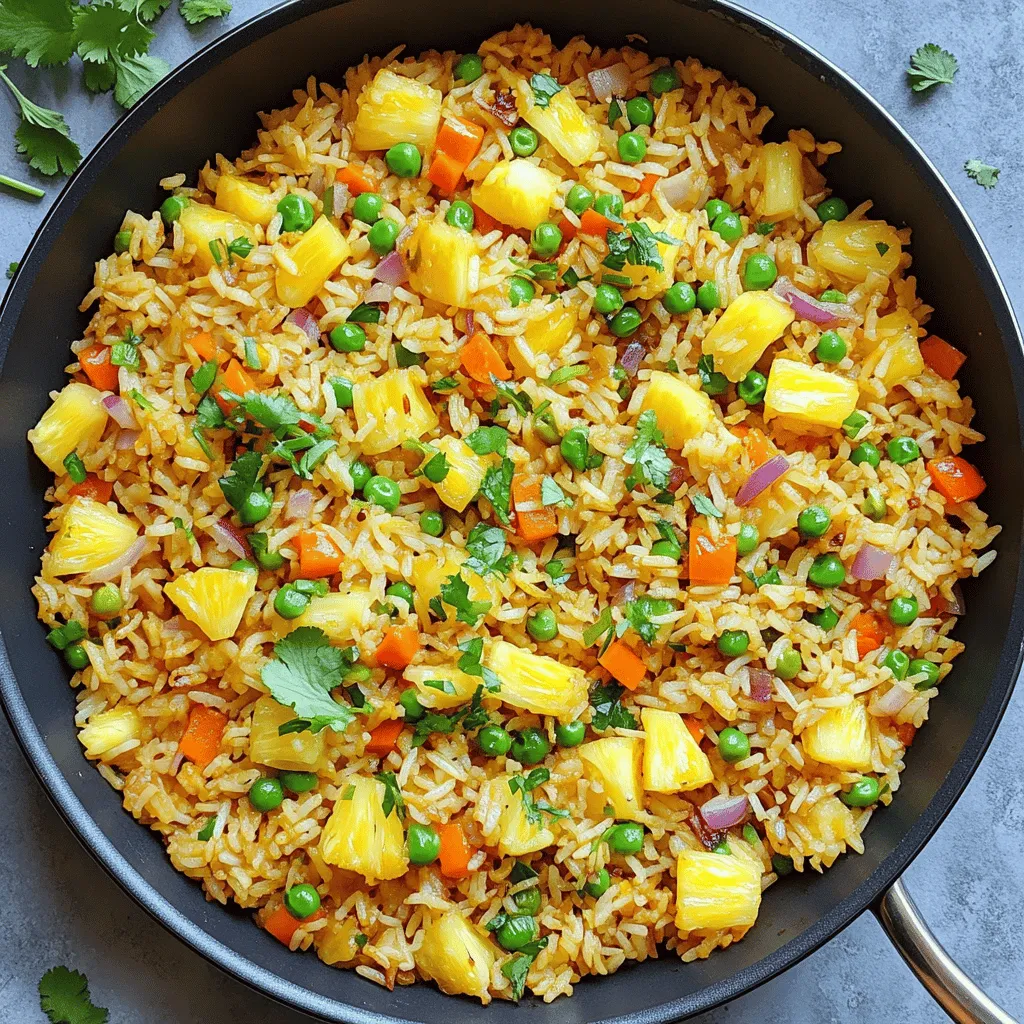
Are you ready to whip up a meal that packs a flavor punch with a tropical twist? In this post, I will share my easy recipe for Pineapple Fried Rice. With just a few simple ingredients, like jasmine rice and fresh pineapple, you’ll create a dish that’s both delicious and colorful. Whether you want a quick weeknight dinner or something fancy for guests, this recipe has you covered! Let’s dive in and start cooking!
Ingredients
Main Ingredients
– 2 cups cooked jasmine rice
– 1 cup fresh pineapple, diced
– 1/2 cup frozen peas and carrots
Optional Ingredients
– 2 eggs, beaten
– Fresh cilantro or parsley for garnishing
Seasoning and Flavors
– 2 tablespoons low-sodium soy sauce
– 1 tablespoon sesame oil
– 1/2 tablespoon curry powder
When you cook Pineapple Fried Rice, you need the right ingredients. Start with jasmine rice. I find that day-old rice works best. It has a firmer texture. Freshly cooked rice can be too soft.
Next, use fresh pineapple. Diced pineapple adds sweetness and bright color. Frozen peas and carrots bring in great texture and flavor. They are easy and quick to use.
For extra protein, consider adding beaten eggs. They make the dish richer and more filling. Fresh cilantro or parsley adds a pop of color and freshness. It’s a nice touch on top.
Now, let’s talk about seasoning. Low-sodium soy sauce is key. It gives umami without being too salty. The sesame oil adds a nutty flavor. Lastly, curry powder gives a warm twist. It makes your fried rice unique.
This combo of ingredients makes your Pineapple Fried Rice tasty and fun.Enjoy cooking!
Step-by-Step Instructions
Preparation of Rice
Using day-old rice is best for pineapple fried rice. It dries out a bit, making it less sticky. If you only have fresh rice, don’t worry! Spread it on a baking sheet. Let it cool for about 30 minutes. This cools the rice and helps it firm up.
Cooking Process
Start by heating a large skillet or wok. Add sesame oil over medium-high heat. Once hot, toss in finely chopped red onion and minced garlic. Sauté for 2-3 minutes. You want them fragrant and soft, but not brown. Next, stir in diced bell pepper, frozen peas, and carrots. Cook them for another 2-3 minutes. This step keeps the veggies crisp and colorful.
Final Assembly
Now it’s time to mix in the pineapple. Add the diced pineapple to the pan and stir gently. This allows the pineapple to caramelize and brings out its sweetness. Next, add the cooled jasmine rice, soy sauce, and curry powder. Use a spatula to combine everything well. Stir-fry for 5-7 minutes, letting the flavors blend. If you want added protein, create a space in the pan. Pour in beaten eggs and scramble until cooked. Mix the eggs into the rice. Finally, taste and adjust with salt and pepper if needed. Fold in chopped green onions for a fresh touch. Serve hot and enjoy this tasty dish!
Tips & Tricks
Achieving Optimal Texture
Using day-old rice is key for great pineapple fried rice. Freshly cooked rice may clump together. Day-old rice has dried out slightly, which helps it fry better. This method gives you that nice, fluffy texture. When you stir-fry, use a high heat and keep the rice moving. This prevents it from getting mushy. Make sure not to overcrowd the pan. If you do, the rice will steam instead of fry.
Enhancing Flavor
To take your fried rice up a notch, try adding more seasonings. A splash of lime juice can brighten the dish. You might also add a pinch of red pepper flakes for heat. For a unique twist, incorporate diced bell peppers or cashews for crunch. You can also add protein like shrimp or chicken if you want more substance. Each ingredient changes the flavor and texture, so feel free to experiment.
Presentation Tips
A beautiful dish makes for a great meal. Use fresh herbs like cilantro or parsley as a garnish. They add color and freshness to your plate. You can also serve the rice in a hollowed-out pineapple for a fun twist. For special occasions, consider adding sliced green onions on top. This not only looks nice but also adds a burst of flavor. Serve it hot and enjoy the smiles around the table!
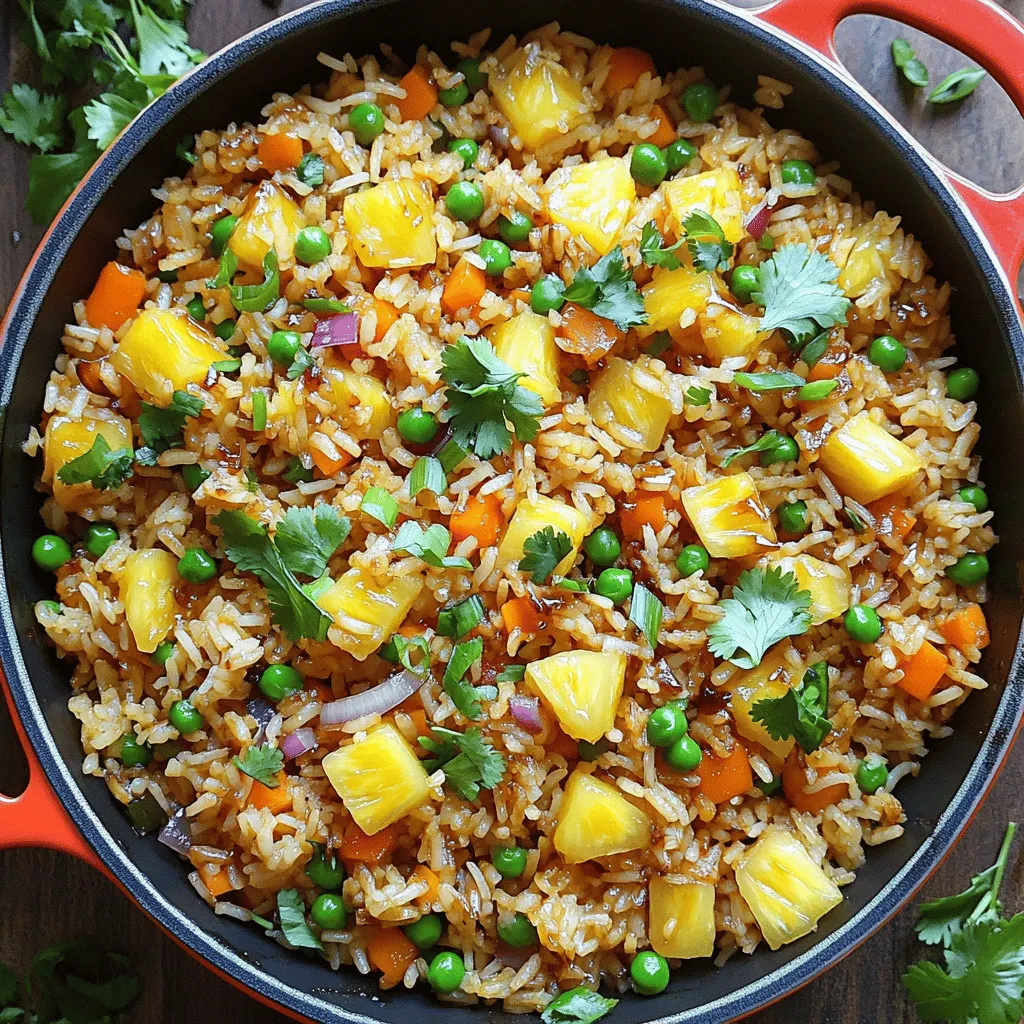
Variations
Vegetarian and Vegan Options
To make pineapple fried rice vegetarian, simply skip the eggs. You can replace them with tofu or chickpea flour. Tofu adds protein and texture. Use firm tofu, and cube it before cooking. For a vegan option, consider using nutritional yeast for added flavor. This way, you keep the dish hearty and satisfying.
Global Twists
You can play with different vegetables to change the flavor. Try adding broccoli, corn, or snap peas. Each brings its own taste and crunch. For a fusion twist, mix in spices from other cuisines. Think about adding curry spices for a unique flair. Thai basil or lime juice can also enhance the dish. These small changes can make your fried rice exciting and new.
Protein Additions
You can add a variety of proteins to your fried rice. Shrimp, chicken, or tofu all work well. For shrimp, cook them for 2-3 minutes until pink. Chicken should be cooked through, which takes about 5-7 minutes. Tofu needs about 4-5 minutes to brown nicely. Each protein adds its own flavor and makes the dish more filling. Remember to adjust the cooking time based on what you choose.
Storage Info
Refrigeration Guidelines
Store your leftover pineapple fried rice in an airtight container. This keeps it fresh and tasty. It’s best to eat it within 3 days. After that, the flavor and texture may change. When cooling, let it sit for no more than two hours. This helps avoid bacteria growth.
Freezing Pineapple Fried Rice
You can freeze pineapple fried rice for later use. First, let it cool completely. Then, pack it in a freezer-safe bag or container. Remove as much air as possible to avoid freezer burn. It can last for about 2 months in the freezer. When you’re ready to eat it, thaw it overnight in the fridge. This helps keep its taste and texture.
Reheating Instructions
To reheat fried rice, use a skillet on medium heat. Add a splash of water or oil to keep it moist. Stir it often to avoid sticking. You can also use the microwave. Place it in a bowl with a lid. Heat in short bursts, stirring in between. This helps heat evenly and keeps it from getting soggy. Enjoy your delicious meal just like it was fresh!
FAQs
What type of rice is best for fried rice?
For fried rice, jasmine rice works best. It has a lovely aroma and a light texture. Day-old jasmine rice is ideal. It dries out a bit, which helps it stay firm when you fry it. Other good options include basmati rice and long-grain rice. These types also stay fluffy and do not clump together.
Can I make Pineapple Fried Rice in advance?
Yes, you can make pineapple fried rice ahead of time. It stores well in the fridge for up to three days. To keep it fresh, place it in an airtight container. You can also freeze it for up to three months. Just make sure to cool it down before storing to avoid extra moisture.
How do I prevent my fried rice from becoming mushy?
To keep your fried rice from getting mushy, avoid using freshly cooked rice. Always use day-old rice. If you must use fresh rice, spread it out on a baking sheet to cool. This helps remove excess moisture. Stir-fry quickly over high heat and avoid crowding the pan. This keeps the rice from steaming and turning mushy.
Pineapple fried rice is simple and fun to make. We discussed essential ingredients, key steps, and creative variations. Remember, using day-old rice helps achieve great texture. Customize the dish with different proteins or veggies for a unique taste. Proper storage lets you enjoy leftovers later. Experiment with flavors and presentations to impress your friends. Happy cooking, and enjoy your delicious meal!
![- 4 large bell peppers (any color of your choice) - 1 cup quinoa, thoroughly rinsed - 2 cups vegetable broth - 1 can (15 oz) black beans, drained and rinsed - 1 cup corn kernels - 1 small red onion, finely chopped - 2 cloves garlic, minced - 1 teaspoon ground cumin - 1 teaspoon smoked paprika - 1 teaspoon chili powder - Salt and freshly cracked black pepper, to taste - 1 cup diced tomatoes - 1 cup shredded cheese - Fresh cilantro or parsley for garnish This recipe is full of vibrant colors and flavors. The bell peppers add sweetness and crunch. Quinoa provides protein, making it a healthy meal choice. I love using black beans for their creaminess and fiber. Corn adds a nice sweetness and texture too. You can choose any color of bell pepper you like. Each color brings a unique taste. Red, yellow, and green all work well. The quinoa must be rinsed to remove saponin, a bitter coating. This step makes the quinoa taste better. Using vegetable broth instead of water boosts flavor. The spices, like cumin and smoked paprika, add warmth and depth. Garlic and onion give a great base flavor. Don't forget to adjust salt and pepper to your taste. I recommend adding cheese on top for a nice finish. It melts beautifully and adds richness. You can use cheddar or a Mexican blend, based on your preference. For a pop of color, garnish with fresh cilantro or parsley. For the complete recipe, check out the [Full Recipe]. - Preheat your oven to 375°F (190°C). - Slice the tops off four large bell peppers. Remove the seeds and membranes. - Stand the peppers upright in a baking dish. This keeps them stable while cooking. - In a saucepan, add one cup of rinsed quinoa and two cups of vegetable broth. - Bring the mixture to a boil over medium heat. - Once boiling, lower the heat and cover the pot. Simmer for about 15 minutes. - Fluff the quinoa with a fork when it’s done. - In a large bowl, combine the cooked quinoa with one can of black beans, one cup of corn, and one small chopped red onion. - Add two minced garlic cloves, one teaspoon of cumin, smoked paprika, and chili powder. - Season with salt and pepper to taste. - Fold in one cup of diced tomatoes before stuffing the peppers. - Carefully spoon the quinoa mixture into each pepper. Pack it down gently. - Top each stuffed pepper with one cup of shredded cheese. - Cover the dish with aluminum foil to keep the moisture in. - Place the covered dish in the preheated oven. Bake for 25 to 30 minutes. - Remove the foil and bake for another 10-15 minutes until the cheese is golden. This recipe brings together flavors and nutrition in a fun way. You’ll enjoy the vibrant colors and tastes! For the complete recipe, check out the Full Recipe. To get the best quinoa, start by rinsing it well. This removes any bitter coating. Use a fine mesh strainer for this step. Next, combine one part quinoa with two parts vegetable broth. This adds flavor. Cook on medium heat until it boils, then lower the heat and cover. Let it simmer for about 15 minutes. The quinoa should be fluffy and all the liquid gone. Spices make a big difference. I love adding ground cumin, smoked paprika, and chili powder for warmth. You can also mix in fresh herbs like cilantro or parsley for freshness. If you want more kick, add chopped jalapeños. Olives give a nice briny taste too. Feel free to get creative with your flavors! Make your dish pop! Serve the stuffed peppers on a bed of fresh greens. This adds color and crunch. You can sprinkle extra cheese on top before serving. A squeeze of lime over the peppers brightens the dish. Consider drizzling with a creamy sauce, like ranch or yogurt, for added richness. For the full recipe, check the details above. {{image_4}} You can make quinoa stuffed peppers vegan by swapping out cheese and broth. Use a plant-based cheese or skip it entirely. For broth, substitute with water or vegetable stock. Add more flavor by mixing in nutritional yeast. For protein, try lentils or chickpeas. Add veggies like spinach, kale, or mushrooms for extra nutrients. Quinoa isn't your only option. You can use rice or couscous. Both grains offer a nice texture. If you want to add meat, chicken, turkey, or even crumbled tofu work great. Just cook the proteins before mixing them into the filling. You can also add diced olives or sun-dried tomatoes for a flavor boost. Feel free to experiment with various pepper types. Bell peppers are common, but try poblano or jalapeño for a kick. Sweet peppers make the dish mild, while spicy peppers add heat. Using different sizes can change your serving style. Smaller peppers can be appetizers, while larger ones can be main dishes. To store your quinoa stuffed peppers after cooking, let them cool first. Place them in an airtight container. This keeps them fresh and tasty. You can store them in the fridge for up to four days. If you want to enjoy them later, be sure to keep the peppers whole. This helps them stay moist. If you want to freeze your stuffed peppers, wrap each one in plastic wrap. Then, place them in a freezer-safe bag or container. This method helps prevent freezer burn. You can freeze them for up to three months. When you are ready to eat, take them out and thaw them overnight in the fridge. Reheat them in the oven at 350°F (175°C) for about 20-25 minutes. This keeps the peppers nice and warm. You can also microwave them for faster results but be careful not to overcook. Enjoy your meal with a burst of flavor! For the full recipe, check out the earlier sections. Yes, you can prepare quinoa stuffed peppers ahead. Cook the quinoa and mix it with the other ingredients. You can stuff the peppers and store them in the fridge for up to 24 hours. If you want, you can bake them later. This saves time on busy days. Look for a few signs. The peppers should be tender but still firm. The filling inside should be hot and bubbly. The cheese on top should melt and turn golden brown. These are good signs your stuffed peppers are ready to enjoy. Yes, you can use other grains. Brown rice, couscous, or farro work well. Each grain has its own cooking time. For brown rice, cook it for about 40-45 minutes. Couscous cooks quickly in about 5 minutes. Adjust cooking times based on the grain you choose. I suggest a few side dishes. A simple salad with mixed greens adds freshness. You can also serve rice or a grain like quinoa on the side. If you want a warm side, consider roasted veggies. These pair well with the stuffed peppers and add color to your plate. Absolutely! This recipe uses quinoa, which is gluten-free. The other ingredients, like beans and veggies, are also gluten-free. Just make sure to check labels on canned goods. This helps ensure no gluten sneaks in. Enjoy this healthy meal worry-free! Quinoa stuffed peppers offer a balanced meal using simple, fresh ingredients. We explored the preparation, cooking tips, and variations. Remember to rinse your quinoa for the best flavor and texture. You can easily adjust the recipe for different diets or flavor profiles. Feel free to experiment with other grains or proteins. Enjoy these tasty peppers now or save some for later. Your kitchen adventures can lead to satisfying meals that everyone loves.](https://joymealplan.com/wp-content/uploads/2025/06/105cb204-6c23-4ed0-80a6-bb54efeb7f27-768x768.webp)
![To make a tasty tomato basil soup, gather these ingredients: - 2 tablespoons extra virgin olive oil - 1 medium yellow onion, finely diced - 3 cloves garlic, minced - 2 cans (14 oz each) diced tomatoes in juice - 2 cups low-sodium vegetable broth - 1 teaspoon granulated sugar - 1 teaspoon dried oregano - Salt and freshly ground black pepper, to taste - 1 cup fresh basil leaves, roughly chopped - 1/2 cup heavy cream (optional for added creaminess) - Crusty bread or homemade croutons, for serving You can change up the flavor of your soup by adding: - A pinch of red pepper flakes for heat - Fresh lemon juice for brightness - A sprinkle of Parmesan cheese for richness - Other herbs like thyme or parsley Fresh basil and tomatoes make a big difference. Here’s how to choose the best: - Basil: Look for bright green leaves. They should be firm, not wilted. Smell the leaves; they should have a strong, sweet aroma. - Tomatoes: Choose ripe tomatoes with no bruises. They should feel heavy and firm. The color should be bright and even, depending on the type. Using high-quality ingredients will enhance the soup's flavor. Enjoy the vibrant taste of fresh basil and tomatoes in your cooking! For the full recipe, check out the [Full Recipe]. First, gather all your ingredients. You will need olive oil, onion, garlic, diced tomatoes, vegetable broth, and spices. Also, have fresh basil and cream ready if you want a richer soup. Start by chopping the onion and mincing the garlic. Dice them small for even cooking. This helps build the soup's flavor from the start. Measure out your diced tomatoes and vegetable broth, so you have them ready. In a large saucepan, heat the olive oil on medium heat. Once hot, add the diced onion. Cook it for about five minutes until it turns soft and clear. Then, add the minced garlic. Stir it for one minute. Be careful not to let it burn. Next, pour in the diced tomatoes and vegetable broth. Stir well to mix everything. Add the sugar, oregano, salt, and pepper. Let the soup come to a gentle boil. Then, reduce the heat to low. Let it simmer for 20 minutes. This helps the flavors mix together nicely. After simmering, take the saucepan off the heat. Let it cool for a few minutes. For a smooth soup, use an immersion blender to blend the soup until it's silky. If you don’t have one, transfer it in batches to a blender. Blend until smooth. Once blended, return the soup to the saucepan. Stir in the chopped basil and cream if you want it creamy. Heat it gently on low for about five minutes. This will let the basil's flavor shine through. Taste your soup before serving. Adjust the salt, pepper, or sugar to your liking. Serve it warm with bread or croutons for a tasty meal. Enjoy your delicious tomato basil soup! For a complete recipe, check the Full Recipe. To make your tomato basil soup extra tasty, focus on fresh herbs. Fresh basil adds a bright touch. You can also use other herbs, like thyme or parsley, for a twist. Seasoning is key! Start with salt and pepper to bring out the flavors. A dash of sugar balances the acidity of the tomatoes. Don’t forget to taste as you go. One common mistake is overcooking the garlic. If it burns, it can turn bitter. Add it just before the tomatoes for the best flavor. Another mistake is skipping the simmering step. This helps the flavors blend well. A quick boil won't do the trick. Lastly, don’t forget to blend the soup well. A chunky texture can be nice, but a smooth soup feels luxurious. Keep your heat at medium for sautéing the onions. This allows them to soften without burning. When it’s time to simmer, lower the heat. A gentle simmer for 20 minutes works best. If you want a silky texture, blend the soup until smooth. A few minutes of gentle heating after blending helps the basil infuse nicely. For the full recipe, check the complete guide above. Enjoy your cooking! {{image_4}} To make a creamy version of tomato basil soup, add heavy cream. This gives the soup a rich and smooth texture. Follow the original recipe and simply stir in 1/2 cup of heavy cream after blending the soup. Heat it gently over low heat for a few minutes. The cream balances the acidity from the tomatoes and adds depth. You can also use coconut cream for a dairy-free option. If you like a chunkier soup, add fresh veggies. Dice up some zucchini, bell peppers, or carrots. Sauté these with the onion at the start. This adds more color and nutrients to your dish. Keep the diced tomatoes, but don’t blend the soup completely. Just stir in the chopped fresh basil at the end for extra flavor. This version is hearty and satisfying. To make a vegan version, skip the heavy cream and use coconut milk instead. It gives a creamy texture and a hint of sweetness. Use vegetable broth and fresh basil as usual. This version keeps the dish plant-based and delicious. You’ll still enjoy all the flavors without animal products. For a kick, add crushed red pepper flakes when cooking. These variations show just how versatile tomato basil soup can be. Each version brings its own twist while keeping that classic flavor. For the full recipe, check out the complete guide. To store your tomato basil soup, let it cool first. Pour it into an airtight container. You can keep it in the fridge for 3 to 4 days. Make sure the lid seals tightly to keep it fresh. If you want to save it longer, freezing is a great option. For freezing, use freezer-safe containers. Leave some space at the top, as the soup will expand when it freezes. You can store it in the freezer for up to 3 months. Label the container with the date, so you know when you made it. It helps to freeze it in portion sizes for easy use later. When you're ready to eat, thaw the soup in the fridge overnight. To reheat, pour it into a pot over low heat. Stir often to prevent sticking. If you want a creamier texture, add a splash of cream while heating. You can also use a microwave, but stir halfway through to heat evenly. Enjoy your delicious soup! You can serve many tasty sides with Tomato Basil Soup. Here are some great options: - Crusty bread - Grilled cheese sandwiches - Homemade croutons - A fresh salad These choices add texture and flavor. For a fun twist, try a cheesy garlic bread. It pairs well with the soup's warmth. Tomato Basil Soup lasts about 3 to 5 days in the fridge. Store it in an airtight container to keep it fresh. To enjoy it longer, you can freeze it. Yes, you can make Tomato Basil Soup in advance. It tastes even better the next day! Just cook the soup, let it cool, and store it in the fridge. You can also freeze it for later use. When ready to serve, simply reheat it on the stove or in the microwave. For a full recipe, check out the Hearty Tomato Basil Delight. Making Tomato Basil Soup is simple and rewarding. We covered the key ingredients, preparation steps, and cooking tips. You can choose fresh basil and ripe tomatoes for the best taste. Variations like creamy or vegan options add more fun. Remember to store leftovers properly to keep them fresh. By avoiding common mistakes, you can create a perfect soup each time. I hope these insights inspire you to enjoy this classic dish all year round.](https://joymealplan.com/wp-content/uploads/2025/06/73c8b43a-025c-4169-ae99-725afa6fdd07-768x768.webp)