Maple Glazed Salmon and Veggies Sheet Pan Delight
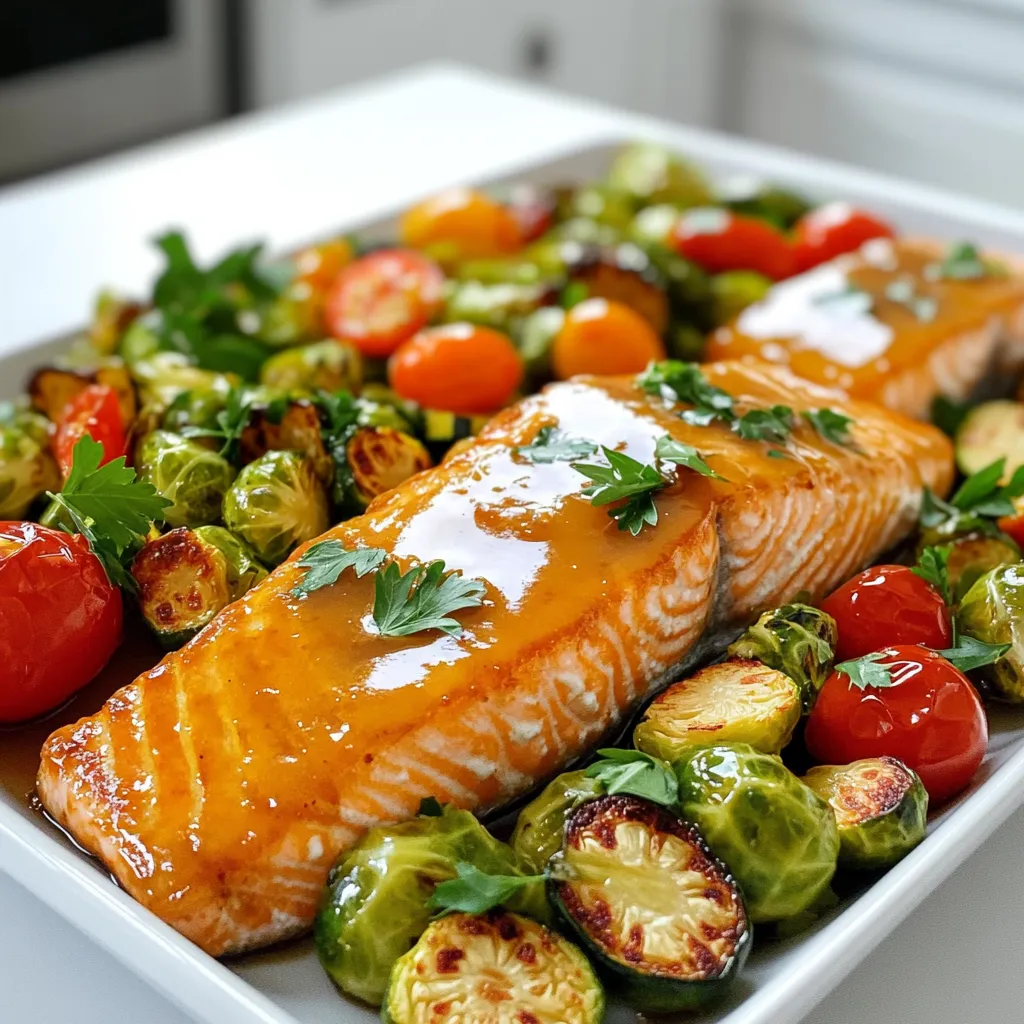

Looking for a quick and tasty dinner? This Maple Glazed Salmon and Veggies Sheet Pan Delight is your answer! It combines tender salmon fillets with colorful veggies, all drizzled in a sweet and savory glaze. You’ll love how simple it is to make. In just a few easy steps, you’ll have a meal that’s as healthy as it is delicious. Let’s dive into this flavorful fish feast!
Ingredients
List of Ingredients
– 4 salmon fillets
– 1/4 cup pure maple syrup
– 2 tablespoons Dijon mustard
– 2 tablespoons soy sauce (or tamari for gluten-free)
– 1 tablespoon olive oil
– 1 teaspoon garlic powder
– 1 teaspoon onion powder
– Salt and pepper to taste
– 1 cup Brussels sprouts, halved
– 1 red bell pepper, sliced into strips
– 1 zucchini, sliced into half-moons
– 1 cup cherry tomatoes, halved
– Fresh parsley, chopped for garnish (optional)
When it comes to cooking, using fresh, high-quality ingredients makes a big difference. For this recipe, I always choose salmon fillets that are bright and firm. The maple syrup gives a sweet flavor. I like using pure maple syrup, as it is natural and rich. Dijon mustard adds a tangy kick, while soy sauce brings depth.
For the veggies, I often choose Brussels sprouts, bell peppers, zucchini, and cherry tomatoes. These vegetables roast well and add color to the dish. Halving or slicing them helps them cook evenly. I enjoy using fresh parsley for garnish, as it adds a nice touch.
Nutritional Information
– Calories per serving: Approximately 350
– Macronutrient breakdown:
– Protein: 30g
– Carbs: 25g
– Fats: 15g
The ingredients in this dish offer many health benefits. Salmon is a great source of protein and healthy fats. It has omega-3 fatty acids, which are good for heart health. The vegetables provide fiber, vitamins, and minerals. For example, Brussels sprouts are high in vitamin C and K.
Using this balanced mix of ingredients, you can enjoy a meal that is not only tasty but also nutritious. This recipe is a perfect choice for a quick weeknight dinner that satisfies your hunger and nourishes your body.
Step-by-Step Instructions
Preparing Your Oven and Sheet Pan
– Preheat to 400°F (200°C).
– Line the baking sheet with parchment paper.
Start by preheating your oven. This step ensures even cooking. Lining the baking sheet makes cleanup easy. It also helps the food not stick.
Making the Maple Glaze
– Combine maple syrup, Dijon mustard, soy sauce, and seasonings.
– Tips for achieving the perfect consistency.
In a small bowl, mix together the maple syrup, Dijon mustard, soy sauce, and olive oil. Add garlic powder, onion powder, salt, and pepper. Whisk until smooth. For the right consistency, make sure there are no lumps. The glaze should be thick enough to coat the salmon but not too thick.
Arranging Salmon and Vegetables
– Positioning salmon and brushing with glaze.
– Tossing and seasoning the vegetables.
Place the salmon fillets in the center of the sheet pan. Brush each fillet with the maple glaze. Set aside some glaze for later. In a big bowl, toss the Brussels sprouts, red bell pepper, zucchini, and cherry tomatoes with olive oil, salt, and pepper. This step helps the veggies to get nice and flavorful.
Baking Process
– Cooking time and temperature considerations.
– Signs the salmon and veggies are properly cooked.
Put the pan in the oven and bake for 15-20 minutes. The salmon should flake easily with a fork when done. The veggies should be tender and slightly caramelized. Keep an eye on them so they do not overcook.
Adding Extra Flavor
– Using the reserved glaze in the last minutes.
– Enhancing flavor without overcooking.
In the last five minutes of baking, brush the reserved glaze over the salmon and veggies. This step boosts the flavor without overcooking. It adds a nice shiny finish to your dish as well.
Tips & Tricks
Perfecting Your Maple Glazed Salmon
To get the right texture for your salmon, cook it until it flakes easily with a fork. This usually takes 15 to 20 minutes at 400°F. Avoid overcooking, as this makes the fish dry. A common mistake is not brushing enough glaze on the salmon. Make sure to coat it well, and save some glaze to add later.
Vegetable Preparation Tips
For the best veggies, choose fresh Brussels sprouts, red bell peppers, zucchini, and cherry tomatoes. These vegetables roast well and add great flavor. Cut the Brussels sprouts in half, slice the bell pepper into strips, and cut the zucchini into half-moons. Halve the cherry tomatoes for even cooking. Even cuts help all the veggies cook at the same time.
Serving Suggestions
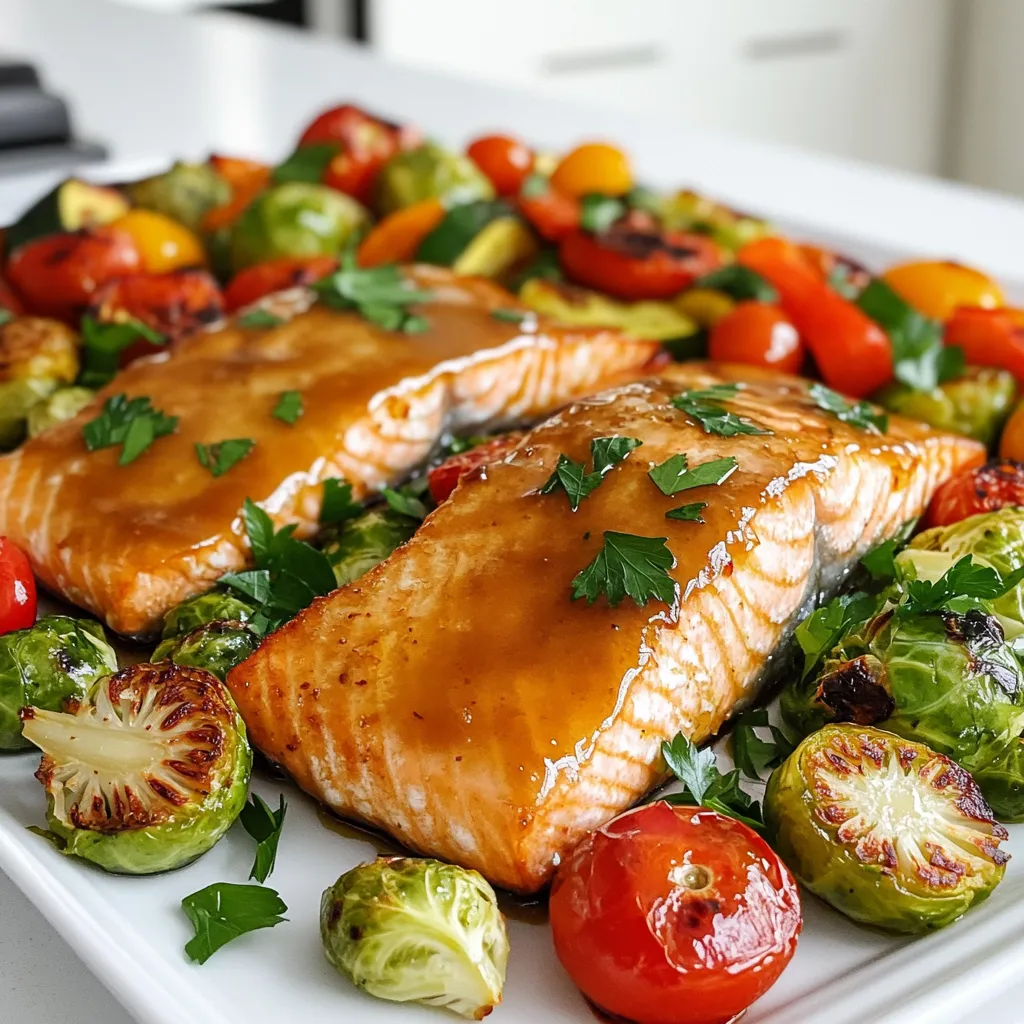
Pair your maple glazed salmon and veggies with fluffy rice or quinoa for a full meal. A crisp green salad also works well. For an eye-catching display, serve the dish right on the baking sheet or transfer it to a large, colorful platter. Garnish with fresh parsley for a pop of color and an added touch of freshness.
Variations
Ingredient Substitutions
You can swap salmon for other fish. Cod or trout works well with the glaze. If you want a vegetarian option, try tofu. It soaks up the flavor just like salmon.
For the veggies, use what is fresh and in season. Carrots, asparagus, or broccoli are great choices. You can mix and match based on what you like. Think about color and texture for a fun dish.
Flavor Enhancements
To give this dish a twist, add spices or herbs. Ginger, dill, or even cumin can change the taste. Fresh herbs like thyme or rosemary can add a nice touch.
If you want heat, add a pinch of red pepper flakes. You can also mix in some sriracha or chili paste. This will create a spicy version that adds excitement to each bite.
Gluten-Free and Dairy-Free Options
This recipe is easy to make allergy-friendly. Use tamari instead of soy sauce for gluten-free needs. Ensure your Dijon mustard is also gluten-free.
For a dairy-free version, there’s no need for any dairy here. Just stick to the recipe as is. It’s perfect for those with dairy sensitivities. You can enjoy a tasty meal without worry.
Storage Info
Storing Leftovers
After enjoying your maple glazed salmon and veggies, let leftovers cool. Place them in an airtight container. This keeps the dish fresh and tasty. Store it in the fridge. It will last for up to three days. Be sure to check for any signs of spoilage before eating.
Freezing Directions
If you want to save more leftovers, you can freeze them. Wrap each salmon fillet and the veggies in plastic wrap. Then, put them in a freezer bag. This prevents freezer burn. You can freeze the dish for up to three months. To thaw, move the container to the fridge overnight. This method keeps the quality intact.
Reheating Instructions
To reheat, a microwave works well, but I prefer the oven. Preheat your oven to 350°F (175°C). Place the salmon and veggies on a baking sheet. Cover them with foil to keep moisture in. Heat for about 10-15 minutes. Check to ensure they are warm but not overcooked. This way, you keep the flavors and textures just right.
FAQs
Can I use frozen salmon for this recipe?
Yes, you can use frozen salmon. Just make sure to thaw it first. Thawing the salmon helps it cook evenly. Place the frozen salmon in the fridge overnight or use the defrost setting on your microwave. Once thawed, follow the same steps in the recipe. The glaze will still add great flavor.
What can I serve with maple glazed salmon and veggies?
You can serve this dish with rice or quinoa. Both options soak up the maple glaze well. A side salad with mixed greens works great too. Consider adding some crusty bread to soak up extra sauce. These sides balance the meal and add freshness.
How do I know when salmon is done cooking?
Salmon is done when it flakes easily with a fork. It should also have an opaque color. Use a food thermometer to check; it should reach an internal temperature of 145°F (63°C). If you see white stuff on the surface, it’s called albumin. It’s safe but means the fish is overcooked.
Can I prepare the glaze in advance?
Yes, you can prepare the glaze ahead of time. Mix the maple syrup, mustard, soy sauce, olive oil, garlic powder, and onion powder. Store it in an airtight container in the fridge. When you are ready to cook, just give it a good stir and brush it on the salmon.
What is the best way to cut vegetables for roasting?
Cut vegetables into even pieces for roasting. Aim for about 1-inch pieces. This size helps them cook evenly. For Brussels sprouts, halve them. Slice bell peppers into strips. Cut zucchini into half-moons. Cherry tomatoes can stay whole or be halved, depending on your preference. Even pieces lead to perfect roasting.
This blog post covered making a tasty maple glazed salmon meal. I shared key ingredients, step-by-step instructions, and tips for tasty veggies. You learned about variations, storage, and frequently asked questions.
This dish is simple and fun to make. You can switch up ingredients to suit your taste. Enjoy every bite and impress your family and friends. Cook well and taste the joy!
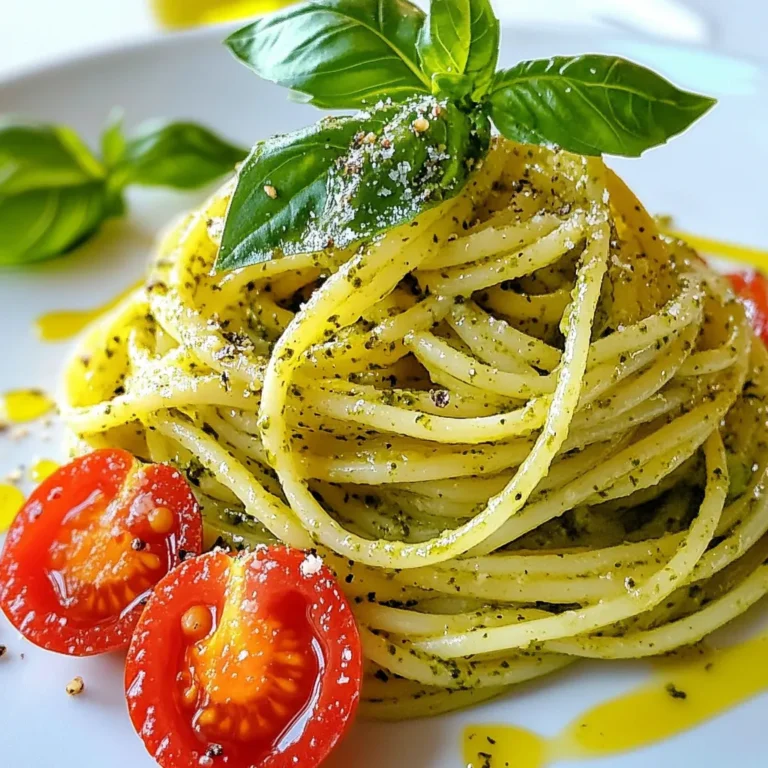
. First, fill a large pot with water. Add a good amount of salt. Bring the water to a rolling boil. Once it boils, add the spaghetti. Cook it until it’s al dente, which usually takes about 8 to 10 minutes. Don't forget to check the package for exact times. After cooking, drain the pasta. Make sure to save about half a cup of the starchy water for later. Set the pasta aside. While the pasta cooks, it’s time to make the sauce. Grab a food processor. Add the ripe avocado flesh, minced garlic, lemon juice, basil, and olive oil. Blend everything together until it’s smooth and creamy. If your sauce looks too thick, don’t worry. Just add a bit of the reserved pasta water. Blend again until you reach your desired consistency. Now that the pasta is ready, return it to the pot. Keep the heat low. Pour the creamy avocado sauce over the warm pasta. Gently toss everything together. Make sure every strand of spaghetti gets coated in the sauce. To make your creamy avocado pasta shine, use ripe avocados. Ripe avocados blend smoothly and offer a rich texture. They should feel soft but not mushy. Next, gradually add pasta water when blending your sauce. This step helps to reach your desired creaminess. Start with a little, then add more as needed. Salt and pepper play a key role in flavor. Always taste before serving. If it feels bland, add more salt or pepper. You can also adjust with Parmesan cheese. This cheese adds a savory note and enhances the dish's richness. If you prefer a vegetarian option, skip the cheese and rely on the avocados for flavor. First impressions matter, especially in food. Garnish with cherry tomatoes for a pop of color. Their sweetness pairs well with the creamy sauce. Next, sprinkle some red pepper flakes for heat. This touch not only looks good but adds a nice kick. Remember, we eat with our eyes first, so make it beautiful! {{image_4}} If you want a gluten-free dish, you can swap regular pasta for gluten-free options. Look for pasta made from brown rice, quinoa, or lentils. These types work well and keep the same great taste. Cook them according to the package directions. This way, everyone can enjoy this creamy avocado pasta. To make this dish vegan, skip the Parmesan cheese. Instead, you can add nutritional yeast. It gives a cheesy flavor without the dairy. Just mix in about 1/4 cup of nutritional yeast into the avocado sauce. This keeps your dish creamy and rich while staying plant-based. You can boost protein by adding grilled chicken or shrimp. Cook the proteins separately until done. Then, slice the chicken or toss the shrimp in with the pasta. The added protein makes this dish heartier and more filling. It’s a great way to turn a light meal into a satisfying feast. For the full recipe, check out the Creamy Avocado Pasta Delight. After making creamy avocado pasta, you may want to save some for later. Store any leftovers in airtight containers. This keeps the pasta fresh and avoids any unwanted odors. Place it in the fridge within two hours of cooking. Enjoy the leftovers within three days for the best taste. If you want to freeze the sauce, that's an option too. To do this, pour the creamy avocado sauce into freezer-safe bags or containers. Make sure to remove as much air as possible to prevent freezer burn. The sauce will stay fresh for about three months. When you’re ready to use it, thaw it in the fridge overnight. When it's time to enjoy your leftovers, reheating is key. The best way to reheat creamy avocado pasta is on the stove. Place the pasta in a pan over low heat. Add a splash of water or olive oil to help loosen the sauce. Stir gently until warm. Avoid the microwave if you can, as it can make the sauce grainy. Enjoy your meal! For the full recipe of creamy avocado pasta, check the earlier section. Yes, you can use frozen avocado. Frozen avocado is convenient and often cheaper. It may not have the same taste as fresh, but it still works well. Just thaw the avocado before blending. This way, you get a creamy sauce without waiting for ripe avocados. If you want a dairy-free option, try nutritional yeast. It adds a cheesy flavor without dairy. You can also use a vegan cheese blend. These substitutes keep the dish tasty while catering to different diets. Feel free to experiment with flavors until you find what you love. Creamy avocado pasta stays fresh for about 2 days in the fridge. Store it in an airtight container. To prevent browning, cover the pasta tightly. If you notice any changes in color or smell, it’s best to toss it. Enjoy your leftovers quickly for the best taste! This recipe combines ripe avocados, pasta, and garlic for a creamy dish. You can adjust ingredients to fit your taste. Adding cheese or protein can enhance flavors. Don't forget to store leftovers properly to enjoy later. Cooking can be fun and simple. Now it's your turn to make this delicious pasta! Enjoy every bite.](https://joymealplan.com/wp-content/uploads/2025/06/e38e2670-4076-4ca9-b5ff-23e6aadb6cf7-768x768.webp)
![To make sticky orange chicken, you'll need a few simple yet flavorful items. Here is a complete list of ingredients you'll need for this recipe: - 1.5 lbs boneless, skinless chicken thighs - 1/2 cup cornstarch - 2 tablespoons vegetable oil - 3 cloves garlic, finely minced - 1-inch piece of fresh ginger, grated - 1/4 cup low sodium soy sauce - 1/2 cup freshly squeezed orange juice - Zest of 1 medium orange - 1/4 cup honey - 2 tablespoons rice vinegar - 1/2 teaspoon red pepper flakes (optional) - 2 green onions, finely chopped, for garnish - Sesame seeds, for garnish Using high-quality chicken is key for this dish. Chicken thighs stay juicy and tender. Cornstarch is essential for a crispy texture. Vegetable oil helps with frying and flavor. Fresh garlic and ginger bring bold taste to the sauce. Orange juice and zest create a bright, zesty flavor. Honey adds sweetness that balances the dish. Rice vinegar gives a touch of tang. If you like spice, add red pepper flakes for heat. Don’t forget the green onions and sesame seeds for garnish. They add color and crunch. This recipe is simple yet packed with flavor. You can find the full recipe in earlier sections. Coating with Cornstarch Start by placing the chicken pieces in a big bowl. Pour in the cornstarch. Mix it well with your hands or a spoon. Make sure all chicken pieces are covered. This step is key for a crispy finish. Sautéing the Chicken Pieces Next, heat the vegetable oil in a large skillet or wok on medium-high heat. Once hot, add the chicken in batches. Avoid crowding the pan. Cook for about 5-7 minutes. Stir it often until the chicken turns golden brown. Check that each piece reaches 165°F inside. Remove the chicken and place it on a plate with paper towels to soak up extra oil. Sautéing Garlic and Ginger Lower the heat to medium. In the same skillet, add the minced garlic and grated ginger. Sauté for about 30 seconds. You want to smell the rich aroma of garlic and ginger. This signals it’s time to mix the sauce. Mixing the Sauce Ingredients Pour in the soy sauce, orange juice, orange zest, honey, and rice vinegar. If you like some heat, add the red pepper flakes. Stir it all together. Increase the heat slightly and let it bubble. Allow the sauce to simmer for 3-5 minutes. You want it to thicken and develop a rich flavor. Glazing the Chicken Now, return the cooked chicken to the skillet. Use a spatula to toss the chicken in the sauce. Ensure every piece gets coated. Let it cook for another 2-3 minutes. This will heat the chicken through and make it sticky and flavorful. Garnishing for Serving Take the skillet off the heat. Sprinkle the chopped green onions and sesame seeds over the chicken. These add color and crunch. Serve this dish hot and enjoy the zesty flavors of your sticky orange chicken. Check the Full Recipe for more details! Importance of Cornstarch Coating Coating the chicken in cornstarch is key for a crispy bite. It helps create a crunchy layer when you fry it. The cornstarch seals in moisture, keeping the chicken juicy. You want to ensure every piece is coated well. This simple step makes a big difference in texture and taste. Avoiding Overcrowding the Pan Do not overcrowd the pan when cooking the chicken. If you add too much at once, the chicken will steam instead of fry. This means less crispiness. Cook in batches and give each piece space. This way, you get that golden-brown color you want. Using Fresh Ingredients Using fresh ingredients makes your dish taste better. Fresh garlic and ginger give a bright flavor. Squeeze your own orange juice for the best taste. Fresh zest adds a lovely aroma. These small details make your sticky orange chicken shine. Adjusting Spice Levels If you like heat, add red pepper flakes. Start with a small amount and taste as you go. You can always add more if you want a kick. If you prefer a milder dish, skip the spice. Tailor the recipe to your taste buds. Pairing with Sides This sticky orange chicken goes well with many sides. Serve it over fluffy jasmine rice for a complete meal. Steamed broccoli or green beans also work nicely. These sides balance the sweetness of the chicken. Presentation Ideas Make your dish look as good as it tastes. Use a white plate to make the orange color pop. Drizzle some extra sauce on top. Sprinkle sesame seeds and green onions for a final touch. A pretty plate makes every meal special. For the full recipe, check out the Sticky Orange Chicken Delight. {{image_4}} You can easily switch up the protein in this dish. - Using Chicken Breasts: You can replace chicken thighs with chicken breasts. They are leaner and will still taste great. Just be sure to cook them until they are juicy. - Substituting with Tofu or Tempeh: For a plant-based option, try tofu or tempeh. Cut them into bite-sized pieces and follow the same steps as the chicken. They soak up the sauce well and give a nice texture. Feel free to play with flavors to make this dish your own. - Adding More Citrus: Want more zing? Add lime or lemon juice. A splash at the end brightens the dish and gives it a fresh twist. - Experimenting with Herbs and Spices: You can also try adding fresh herbs like cilantro or basil. A sprinkle of these can add depth and freshness. This recipe can fit many dietary needs. - Gluten-Free Modifications: If you're gluten-free, use tamari instead of soy sauce. This keeps the flavor while making it safe for your diet. - Low-Sugar Alternatives: For a low-sugar version, substitute honey with a sugar-free sweetener. This still gives sweetness without the extra calories. These variations help you enjoy Sticky Orange Chicken in your own way. Check the Full Recipe for more details! After you enjoy your sticky orange chicken, you may have some leftovers. To keep them fresh, store the chicken in an airtight container. Place it in the fridge. It will last for about 3 to 4 days. When reheating, use the microwave or a skillet. Heat it gently to avoid drying it out. A splash of water can help keep it moist. If you want to keep your sticky orange chicken longer, consider freezing it. Allow the chicken to cool completely before freezing. Place it in a freezer-safe bag or container. Remove as much air as possible to prevent freezer burn. It can stay in the freezer for up to 3 months. When you're ready to use it, thaw the chicken overnight in the fridge. For a quicker method, you can use the defrost setting on your microwave. Just be careful not to start cooking it. To maintain the best flavor, always serve your sticky orange chicken fresh. If you prepare it ahead of time, store the sauce separately. This will help keep the chicken crispy. When you are ready to serve, reheat both the chicken and sauce. Toss them together just before serving for that sticky goodness. For more details on how to make this dish, check out the Full Recipe. You can enjoy Sticky Orange Chicken with a few tasty sides. Here are some great options: - Fluffy jasmine rice - Steamed broccoli - Fried rice - Sautéed snap peas - Crisp green salad For drinks, pair it with: - Iced tea - Sparkling water with lemon - A light white wine These sides and drinks will balance the sweet and sticky flavors of the chicken. To kick up the heat in your Sticky Orange Chicken, try these tips: - Adding Heat with Pepper Flakes: Sprinkle red pepper flakes into the sauce. Start with a little and add more if needed. This gives a nice kick without overpowering the dish. - Experimenting with Hot Sauces: Mix in your favorite hot sauce. A few drops can add flavor and heat. Choose a sauce that complements the orange taste. You can adjust the heat to match your taste! Yes, you can prep Sticky Orange Chicken in advance. Here’s how: - Prep Tips for Making in Advance: Marinate the chicken in the sauce for a few hours or overnight. This adds great flavor. You can also chop the garlic and ginger ahead of time. - Adjusting Cooking Times: When cooking, make sure the chicken is heated through. If you make it ahead, just warm it on low heat in the skillet. This keeps it from drying out. These tips help you enjoy a delicious meal even on busy days. For the full recipe, check out the [Full Recipe]. This blog post guided you through making Sticky Orange Chicken, from ingredients to storage tips. Remember to coat the chicken in cornstarch for that perfect crunch. Use fresh ingredients to enhance flavor and feel free to experiment with proteins and spices. With these straightforward steps and variations, you can enjoy a tasty meal that suits your needs. Keep these tips in mind for a delicious outcome every time. Now, it’s time to bring this vibrant dish to your table!](https://joymealplan.com/wp-content/uploads/2025/06/0fb5afb5-059d-4b64-a6dc-9cc9d9794f9b-768x768.webp)