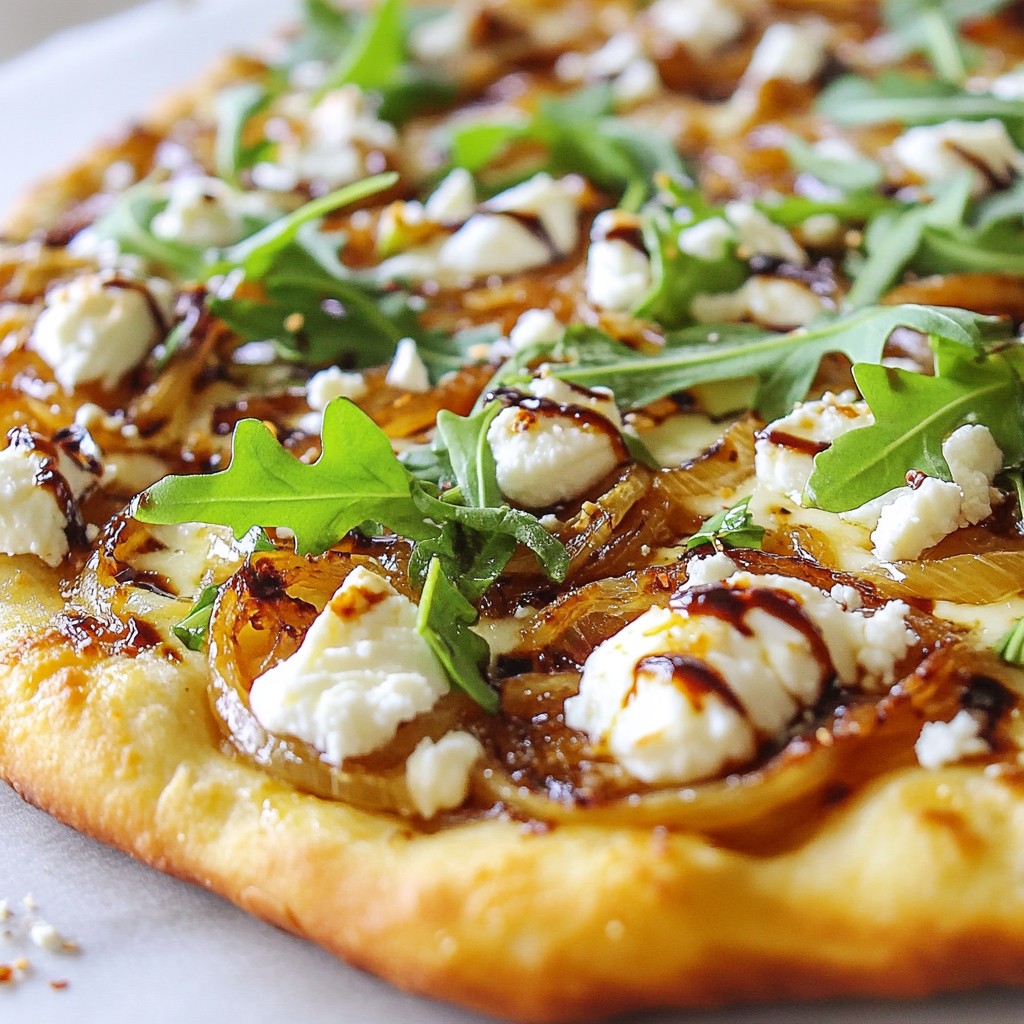
Looking to elevate your pizza night? This Caramelized Onion Goat Cheese Pizza is a flavorful delight that combines rich, sweet onions with creamy goat cheese. I'll share simple steps to create a golden, crispy crust topped with deliciousness. This guide offers ingredient tips, easy instructions, and ways to customize your pizza. Whether you’re a novice or a pro, you’ll love this tasty treat. Let’s get cooking!
Why I Love This Recipe
- Flavor Explosion: The combination of sweet caramelized onions and creamy goat cheese creates an unforgettable flavor profile that tantalizes the taste buds.
- Quick and Easy: This recipe is simple to follow and can be prepared in just 45 minutes, making it perfect for a weeknight dinner or a casual gathering.
- Fresh Ingredients: Using fresh thyme and peppery arugula adds a delightful freshness that balances the richness of the cheeses.
- Customizable: You can easily modify this pizza by adding your favorite toppings or adjusting the cheese types for a unique twist every time.
Ingredients
List of Ingredients
- 1 pre-made pizza dough (homemade can also be used)
- 2 large onions, thinly sliced
- 2 tablespoons extra virgin olive oil
- 4 ounces creamy goat cheese, crumbled
- 1 cup fresh shredded mozzarella cheese
- 1 tablespoon balsamic vinegar
- 1 teaspoon fresh thyme leaves (or ½ teaspoon dried thyme)
- Salt and freshly ground black pepper to taste
- A handful of peppery arugula (for garnish)
- Crushed red pepper flakes (optional, for an extra kick)
Ingredient Substitutions
You can swap the goat cheese for feta if you prefer a tangy taste. For a creamier texture, use ricotta cheese. If you want a different herb, try rosemary instead of thyme. You can also replace balsamic vinegar with apple cider vinegar for a milder flavor. If you don’t have pizza dough, use flatbread or pita bread as a base.
Fresh vs. Dried Herbs
Fresh herbs bring a bright and vibrant flavor. I love using fresh thyme in this pizza. Dried herbs are more concentrated, so use less. If you use dried thyme, keep it to half the amount. Both types can work, but fresh herbs add a special touch to your dish.
Step-by-Step Instructions
Caramelizing the Onions
To start, heat 2 tablespoons of olive oil in a large skillet over medium-low heat. Once the oil is hot, add the 2 large thinly sliced onions and a pinch of salt. Stir the onions every few minutes. You want to cook them slowly for about 25-30 minutes. This lets them soften and turn golden brown. The slow cooking brings out their sweet flavor. When they are perfectly caramelized, stir in 1 tablespoon of balsamic vinegar and 1 teaspoon of thyme leaves. Cook for another 2-3 minutes, then season with salt and pepper. Set the skillet aside.
Preparing the Pizza Dough
While the onions cool, preheat your oven to about 475°F (245°C). This heat helps make a crispy crust. On a floured surface, roll out your pre-made or homemade pizza dough. Make it as thick or thin as you like. A thinner crust will be crispier, while a thicker one will be chewier. Carefully transfer the rolled dough to a pizza stone or a baking sheet lined with parchment paper.
Assembling and Baking the Pizza
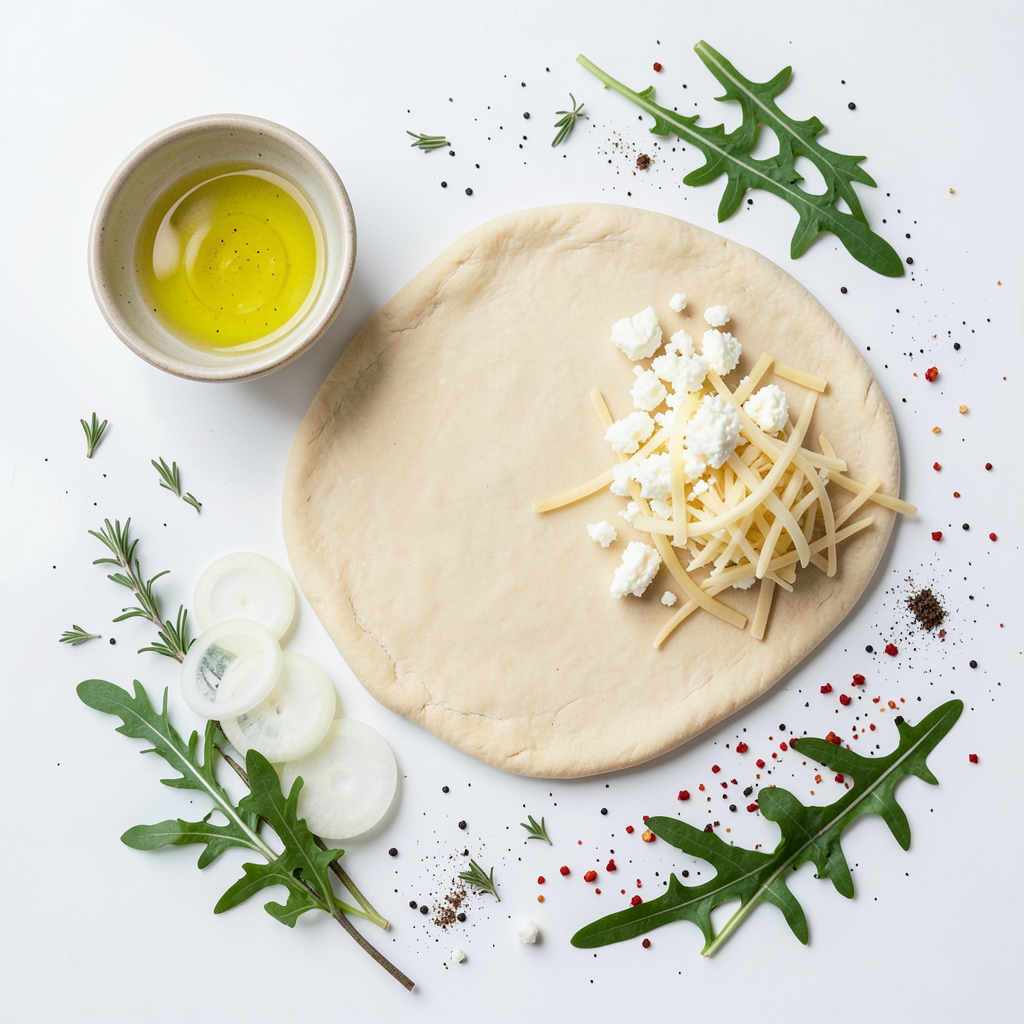
Now it’s time to build your pizza! Spread the caramelized onion mixture evenly over the dough, leaving a small edge for the crust. Next, sprinkle 1 cup of shredded mozzarella cheese over the onions. Then, crumble 4 ounces of creamy goat cheese on top. This cheese adds a rich taste that pairs well with the sweet onions.
Slide the pizza into your preheated oven and bake for 12-15 minutes. Look for a golden brown crust and bubbly cheese. Once it’s done baking, let the pizza cool for a couple of minutes. Top it with a handful of peppery arugula and sprinkle on some crushed red pepper flakes if you like a little heat. Finally, slice your pizza and enjoy!
Tips & Tricks
Perfecting the Caramelization Process
To make the best caramelized onions, you need time and patience. Start with medium-low heat. Add a pinch of salt to help the onions release moisture. Stir them often for even cooking. Cook for about 25-30 minutes. You want them soft and golden brown. If they cook too fast, they'll burn. So, lower the heat if needed. Adding balsamic vinegar at the end brings a rich flavor. It enhances the sweetness of the onions.
Achieving a Crispy Crust
A crispy crust is key for pizza. Preheat your oven to 475°F (245°C). This high heat helps the dough rise and crisp up. Roll your dough thin for extra crunch. Use a pizza stone if you have one. It holds heat better than a baking sheet. If using a sheet, line it with parchment paper. This helps prevent sticking and keeps the bottom crispy.
Optimal Cheese Combinations
For this pizza, I love using goat cheese and mozzarella. Goat cheese adds creaminess and a tangy flavor. Mozzarella melts beautifully and gives a nice stretch. You can also mix in some sharp cheddar for extra flavor. If you want something unique, try feta or blue cheese. These cheeses can add a different twist to your pizza. Just keep the balance in mind for a delicious bite.
Pro Tips
- Slice Onions Thinly: Thinly slicing the onions allows them to caramelize evenly and quickly, resulting in a sweeter and more flavorful topping.
- Use Fresh Herbs: Fresh thyme adds a vibrant flavor to the pizza. If you have other fresh herbs like rosemary or oregano, feel free to mix them in for added depth.
- Preheat Your Oven: Ensure your oven is fully preheated before baking the pizza. This helps achieve a crispy crust and perfectly melted cheese.
- Experiment with Cheese: While goat cheese and mozzarella work beautifully together, consider adding other cheeses like fontina or parmesan for an extra layer of flavor.
Variations
Additional Toppings to Consider
You can make your pizza even better by adding extra toppings. Here are some ideas:
- Sliced mushrooms: They add an earthy taste.
- Fresh spinach: This gives a nice color and flavor.
- Sliced tomatoes: These can brighten up the dish.
- Bacon or prosciutto: For a savory, salty kick.
- Artichoke hearts: They add a unique twist.
Feel free to mix and match toppings based on what you like.
Making it Vegetarian or Vegan
Transforming this pizza to fit a vegetarian or vegan diet is simple. For a vegetarian version, skip meat toppings and stick to veggies.
For a vegan option, swap the cheese with vegan cheese. You can also try cashew cheese for creaminess. Use olive oil instead of butter for caramelizing onions.
Using Different Dough Options
You can switch up the dough to suit your taste. Here are some options:
- Cauliflower crust: A low-carb choice that’s full of flavor.
- Whole wheat dough: This adds extra fiber and nutrients.
- Gluten-free dough: Perfect for those with gluten allergies.
Experimenting with different doughs can change the whole pizza experience.
Storage Info
How to Store Leftovers
To keep your pizza fresh, let it cool first. Place slices in an airtight container. This helps keep the crust from getting soggy. Store in the fridge for up to three days. If you want to save it longer, freezing is a great option.
Reheating Tips
When you're ready to enjoy leftovers, I suggest using the oven. Preheat it to 375°F (190°C). Place the pizza slices on a baking sheet. Heat for about 10-15 minutes. This way, the crust stays crispy, and the cheese melts nicely. You can also use a skillet on low heat for a few minutes if you prefer.
Freezing the Pizza
Freezing is easy! Wrap individual slices in plastic wrap. Then, place them in a freezer-safe bag. Make sure to push out as much air as possible. You can freeze the pizza for up to two months. When you’re ready to eat, thaw in the fridge overnight before reheating.
FAQs
What is the best way to caramelize onions?
To caramelize onions, start with medium-low heat. Heat olive oil in a large skillet. Add thinly sliced onions and a pinch of salt. Stir often for about 25-30 minutes. You want them soft and golden brown. This process brings out their natural sweetness. Adding balsamic vinegar and thyme at the end enhances the flavor. This step is key for your pizza.
Can I use pre-made caramelized onions?
Yes, using pre-made caramelized onions can save time. They often taste great and add nice flavor. Look for a brand that uses simple ingredients. Make sure they do not have too many added sugars or preservatives. However, making your own allows for better control over taste and texture.
How do I reheat the pizza without losing crispiness?
To reheat the pizza, use an oven or a skillet. An oven works best. Preheat it to 375°F (190°C). Place the pizza directly on the oven rack or a baking sheet. Bake for 10 minutes or until hot. If using a skillet, heat it over medium heat. Add the pizza and cover. This keeps it warm and crispy. Avoid using a microwave, as it can make the crust soggy.
To wrap up, we explored key elements for making delicious pizza at home. We covered essential ingredients and their swaps, plus the differences between fresh and dried herbs. You learned to caramelize onions, prepare dough, and bake pizza to perfection. Remember our tips for a crispy crust and optimal cheese choices. Finally, consider the variations to customize your pizza. With proper storage, your leftovers can taste great again. Enjoy your cooking journey and create pizzas that delight every time.