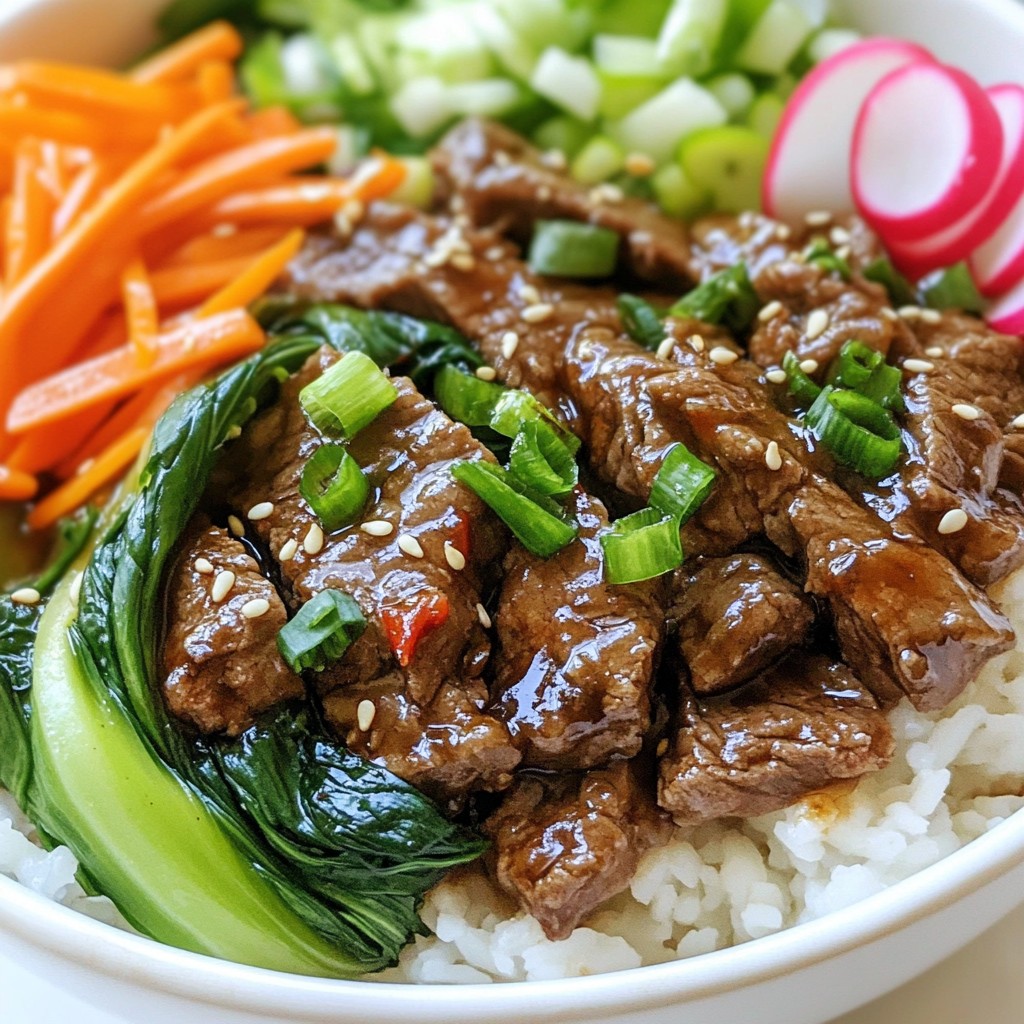
If you crave a meal that's both tasty and easy to make, look no further. Korean Beef Bulgogi Bowls are your answer! With a sweet and spicy marinade, tender beef, and fresh veggies, this dish packs a punch. I will guide you through every step, from simple ingredients to quick assembly. Get ready to impress your family and friends with a meal that’s full of flavor and joy. Let's dive in!
Why I Love This Recipe
- Flavor Explosion: This dish features a perfect blend of savory, sweet, and spicy flavors that come together to create a delightful taste experience.
- Quick and Easy: With a prep time of just 10 minutes, this recipe is perfect for busy weeknights or when you want to impress guests without spending hours in the kitchen.
- Customizable Ingredients: You can easily swap in your favorite vegetables or adjust the spice level to suit your taste, making it versatile for everyone.
- Beautiful Presentation: The vibrant colors of the beef, vegetables, and garnishes make this dish not only delicious but also a feast for the eyes!
Ingredients
Main Ingredients
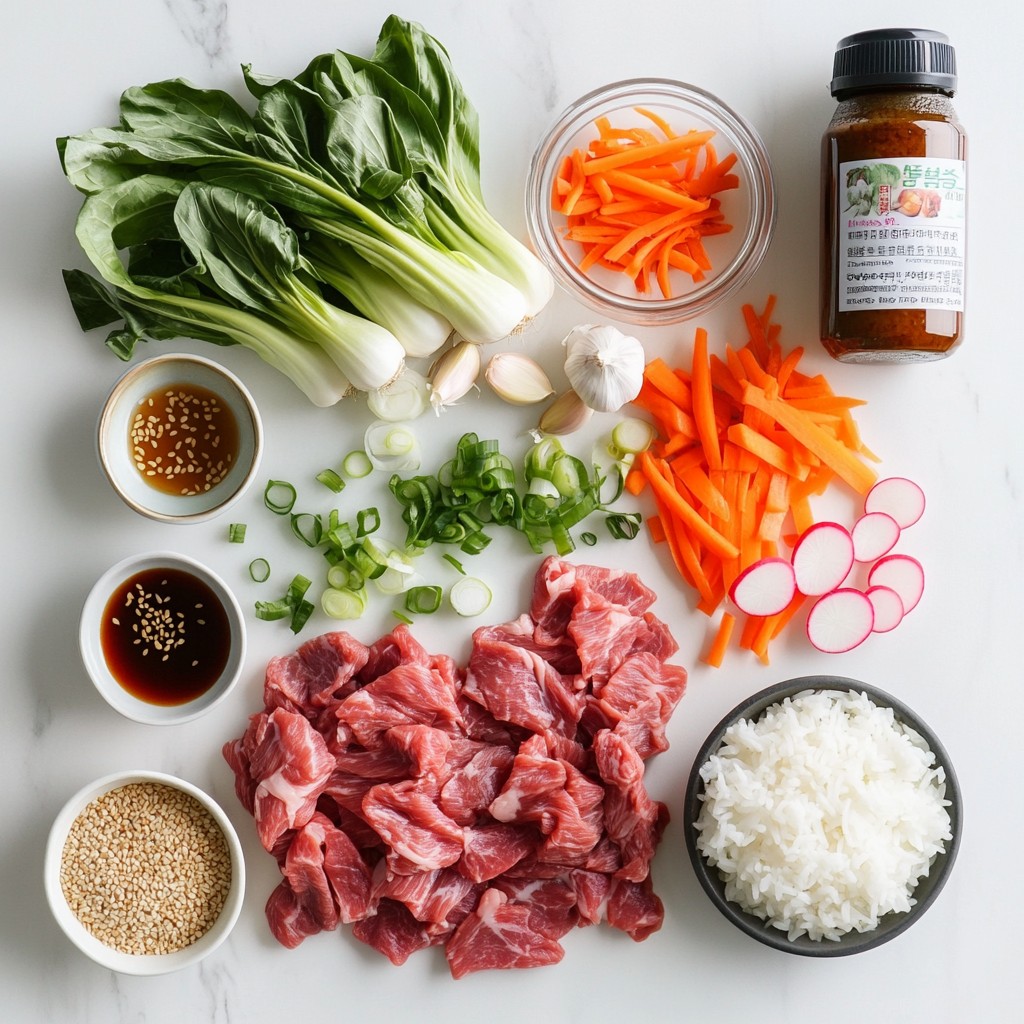
- 1 pound beef sirloin, thinly sliced against the grain
- 1/4 cup soy sauce
- 2 tablespoons brown sugar
- 2 tablespoons sesame oil
- 3 cloves garlic, finely minced
- 1 tablespoon fresh ginger, grated
- 1 tablespoon gochujang (Korean chili paste)
- 1 teaspoon freshly ground black pepper
- 2 tablespoons green onions, finely chopped
- 1 cup cooked rice (choose between white or brown)
- 1 cup carrots, julienned
- 1 cup bok choy or fresh spinach, chopped
- Sesame seeds, for garnish
- Sliced radishes, for garnish
I love starting with fresh ingredients. Quality beef sirloin makes a huge difference. Cut it thin against the grain. This keeps the meat tender and easy to chew.
Next comes the marinade. It is the heart of the dish. Combine soy sauce, brown sugar, sesame oil, minced garlic, grated ginger, gochujang, and black pepper. This mix gives a sweet, spicy, and savory kick. Whisk it well. The sugar should dissolve completely to create a smooth sauce.
For vegetables, I like using colorful and crunchy options. Carrots add sweetness. Bok choy or spinach brings freshness. Both give great texture and flavor. Green onions add a nice bite. And radishes are perfect for garnish. They add a crisp touch.
Lastly, choose your rice. White rice is soft and fluffy. Brown rice has a nutty flavor and more fiber. Both work well with the beef and veggies.
With these ingredients, you’re ready to create a meal bursting with flavor and color.
Step-by-Step Instructions
Marinating the Beef
- Prepare the marinade: In a bowl, mix the soy sauce, brown sugar, sesame oil, minced garlic, grated ginger, gochujang, and black pepper. Stir well until the sugar dissolves.
- Coat the beef slices: Add the thinly sliced beef to the marinade. Make sure each piece is well-coated.
- Refrigeration time: Cover the bowl and refrigerate for at least 30 minutes. This step lets the flavors soak in.
Cooking the Beef
- Heating the skillet: Heat a large skillet over medium-high heat. Wait until it gets hot.
- Cooking the beef: Remove the beef from the marinade. Cook it in a single layer in the skillet. Stir often for about 3-4 minutes. The beef should be browned and cooked through.
Adding Vegetables and Assembling
- Incorporating vegetables: Once the beef is done, add the julienned carrots and chopped bok choy (or spinach). Toss them in for 2-3 minutes until they are tender but still crisp.
- Assembling the bowls: Start with a scoop of cooked rice in each bowl. Top the rice with the beef and vegetable mix for a nice balance.
- Garnishing for presentation: Drizzle the thickened marinade over the top. Sprinkle with chopped green onions and sesame seeds. For a fresh touch, add sliced radishes on the side.
Tips & Tricks
Achieving Authentic Flavors
- Importance of marination time: Marinating the beef is key. I suggest at least 30 minutes. Longer marination enhances the flavor, making the beef tender and juicy.
- Recommended brands for ingredients: Use high-quality soy sauce, like Kikkoman or Lee Kum Kee. For gochujang, try Sunchang or Chunyang. These brands give you the best taste.
- Ideal cooking temperature for beef: Cook the beef over medium-high heat. This ensures it browns nicely without becoming tough. Watch it closely for 3-4 minutes.
Presentation Tips
- Bowl arrangement ideas: Start with a base of rice. Add the beef and vegetables in sections. This creates a colorful and appealing look.
- Garnish suggestions: Top with chopped green onions and sesame seeds. Add sliced radishes on the side for crunch and color. These small touches make your bowl pop!
Pro Tips
- Marinate Longer for More Flavor: If time allows, marinate the beef for a few hours or even overnight. This will enhance the flavor and tenderness of the meat.
- Choose Quality Beef: Opt for high-quality sirloin or ribeye for the best taste and texture. The better the meat, the more delicious your bulgogi will be!
- Customize Your Veggies: Feel free to add other vegetables like bell peppers or zucchini. This not only adds color but also boosts the nutritional value of your meal.
- Serve with Side Dishes: Pair your bulgogi bowls with traditional Korean side dishes like kimchi or pickled vegetables for a more authentic experience.
Variations
Alternative Proteins
You can easily swap beef for chicken or tofu. For chicken, use skinless, boneless thighs or breasts. Marinate them just like the beef. Tofu is an excellent choice for a vegetarian option. Press it to remove extra water, then slice it into cubes. Marinate the tofu for at least 30 minutes. Grill or sauté until golden brown. These swaps keep the flavors vibrant and fun.
Ingredient Swaps
Feel free to change up the veggies in your bowl. You might use bell peppers, snap peas, or zucchini instead of bok choy and carrots. Each vegetable brings its own taste and texture. For rice, both white and brown work well, but you can try cauliflower rice for a low-carb option. This flexibility helps you create a bowl that suits your taste and dietary needs.
Storage Info
Refrigeration
To store leftovers, let your Korean Beef Bulgogi Bowls cool completely. Then, place them in an airtight container. You can keep them in the fridge for up to three days. Always check for a fresh smell before eating. If it smells off, it’s best to toss it.
Freezing Recommendations
If you want to save your bowls for later, freezing is a great option. Pack the cooked beef and vegetables in freezer-safe bags. Make sure to remove as much air as possible. You can freeze them for up to three months.
When you are ready to enjoy your meal, thaw it in the fridge overnight. Reheat the bowls in a skillet over medium heat. Add a splash of water or broth to keep them moist. Stir until everything is hot. This way, your beef and veggies stay tasty and fresh!
FAQs
What is Korean Beef Bulgogi?
Korean Beef Bulgogi is a popular dish from Korea. It features thinly sliced beef marinated in a mix of soy sauce, sugar, and spices. The name "bulgogi" means "fire meat" in Korean. This dish has roots that go back centuries. It showcases the balance of sweet and savory flavors, making it a favorite in many homes.
How can I make it spicier?
To spice up your beef bulgogi, add more gochujang, the Korean chili paste. Start with an extra teaspoon and taste as you go. You can also mix in some sliced fresh chili peppers for a fresh kick. Another option is to sprinkle red pepper flakes while cooking. Just remember to balance the heat with the sweetness from the brown sugar.
Can I meal prep these bowls?
Yes, meal prepping these bowls is easy! You can marinate the beef a day ahead. Cook the beef and vegetables, then store them in airtight containers. Keep the rice separate to prevent it from getting soggy. When you're ready to eat, just heat everything and assemble your bowls. This method saves time on busy days while still delivering a delicious meal.
In this blog post, we explored how to make delicious Korean Beef Bulgogi bowls. You learned about key ingredients like beef sirloin and tasty marinade elements. I shared step-by-step instructions for marinating, cooking, and assembling the bowls. We also discussed tips for authentic flavors, variations, and storage.
Korean Beef Bulgogi is a fun dish to try at home. Experiment with different proteins and veggies. Enjoy your cooking journey and impress your friends and family with these flavorful meals!