
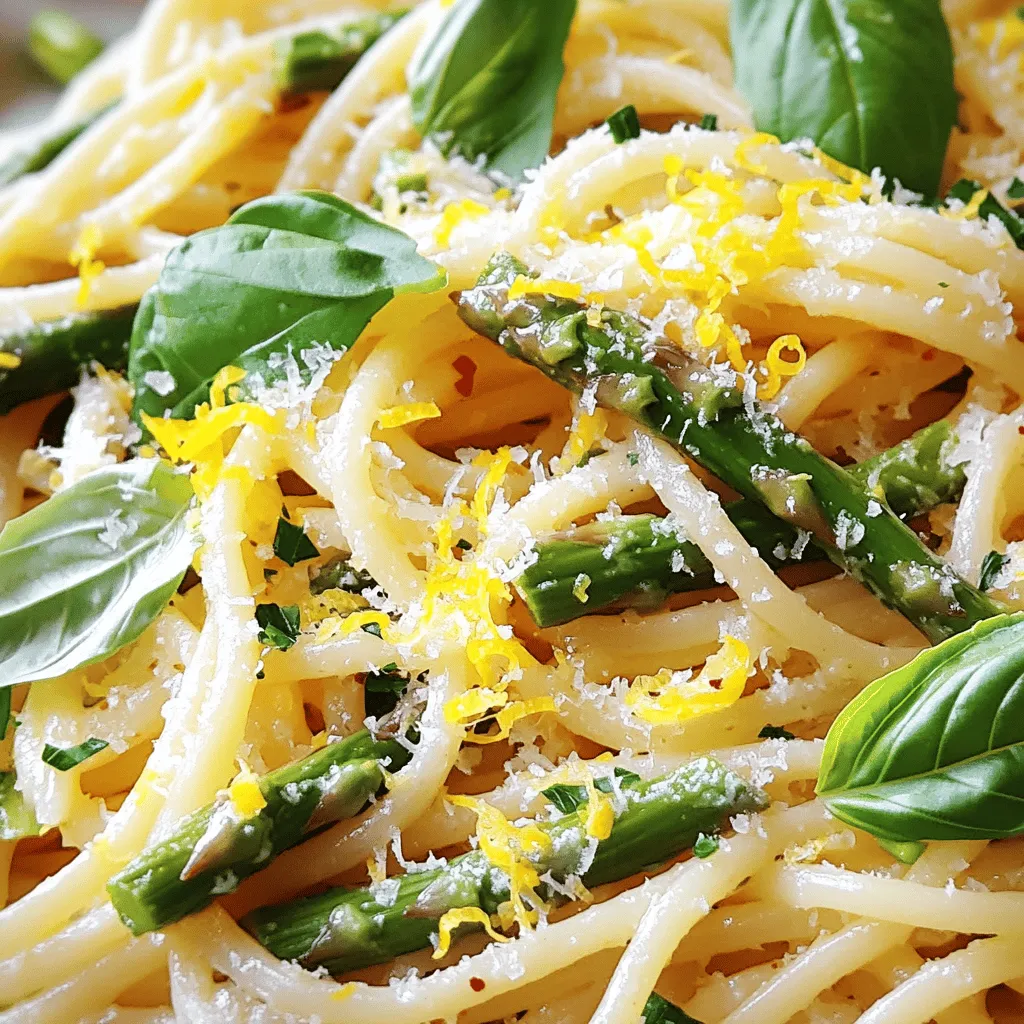
Lemon Garlic Asparagus Pasta Fresh and Flavorful Dish

Looking for a fresh and tasty dinner idea? This Lemon Garlic Asparagus Pasta hits the spot! With bright lemon and crisp asparagus, it’s packed with flavor but quick to make. In just a few simple steps, you’ll enjoy a dish that impresses everyone at the table. Ready to whip up a meal that’s both healthy and satisfying? Let’s dive into the recipe!
Ingredients
Main Ingredients
– 8 oz spaghetti or linguine
– 1 bunch of fresh asparagus, trimmed and cut into 2-inch pieces
– 4 cloves garlic, finely minced
– 1 large lemon (zested and juiced)
– ¼ cup extra-virgin olive oil
Optional Ingredients
– ½ teaspoon red pepper flakes (optional, for heat)
– ½ cup grated Parmesan cheese (or a vegan cheese alternative)
– Fresh basil or parsley, chopped, for garnish
– Salt and freshly cracked black pepper, to taste
For this dish, I love using spaghetti or linguine. They hold sauce well and add a nice bite. Fresh asparagus gives this pasta a crisp texture and bright flavor. Garlic adds depth, while lemon brings a zesty kick that wakes up the taste buds. Extra-virgin olive oil ties everything together, adding richness.
You can spice it up with red pepper flakes for a bit of heat. Grated Parmesan cheese adds a savory touch, and fresh herbs like basil or parsley make it pop. I always keep salt and black pepper handy for seasoning. These ingredients create a fresh and flavorful dish you will enjoy.
Step-by-Step Instructions
Cooking the Pasta
First, grab a large pot and fill it with water. Add a good amount of salt to the water. Bring it to a rolling boil. Once it boils, add the spaghetti or linguine. Cook the pasta according to the package instructions until it is al dente. When it’s done, reserve half a cup of pasta water. Then, drain the pasta and set it aside.
Blanching the Asparagus
Now, use the same pot of boiling water. Carefully add the asparagus pieces to the pot. Blanch them for about 2 to 3 minutes. You want them to turn bright green and be tender-crisp. After blanching, drain the asparagus and keep them warm.
Preparing the Garlic Oil
In a large skillet, set the heat to medium. Pour in the extra-virgin olive oil. Add the minced garlic to the oil. Sauté the garlic for 1 to 2 minutes. Stir frequently to keep it from burning. You want the garlic to smell great but not turn brown.
Combining Ingredients
Next, add the blanched asparagus to the skillet. Let it mingle with the garlic oil. If you like some heat, add red pepper flakes now. Stir everything well and cook for another minute. This allows the flavors to come together.
Adding Pasta and Lemon
Time to add the pasta! Toss the drained spaghetti or linguine into the skillet. Squeeze the juice of the lemon over the pasta. Don’t forget to add the lemon zest too. Gently toss everything until well mixed. If the dish looks a bit dry, add some of the reserved pasta water. This helps create a nice sauce.
Finishing Touches
Remove the skillet from the heat. Stir in the grated Parmesan cheese. Mix until it melts into the pasta. Season with salt and freshly cracked black pepper to taste. For an extra touch, garnish with chopped fresh basil or parsley before serving.
Tips & Tricks
Perfecting the Pasta
To make your pasta just right, cook it until it’s al dente. This means it should be firm but not hard. Follow the package’s cooking time closely. Remember to save some pasta water before draining. This water helps adjust the sauce later. If your sauce feels too thick, add a splash of this reserved water until it feels just right.
Flavor Enhancements
Adding herbs can lift your dish to new heights. Fresh basil or parsley adds a bright taste. You can also try adding a bit more lemon juice to brighten the dish. Taste as you go to find the right balance. Adding lemon zest will give an extra punch of flavor.
Presentation Ideas
Plating is key to impressing your guests. Use shallow bowls to create a lovely look. Consider adding a sprinkle of Parmesan on top and a lemon wedge on the side. This not only looks great but also gives a hint of freshness. A few chopped herbs on top will bring color and flavor. Enjoy the beauty of your dish as much as the taste!

Variations
Gluten-Free Option
You can easily make this dish gluten-free. Just swap regular spaghetti or linguine for gluten-free pasta. There are many great options available. Look for rice, quinoa, or chickpea pasta. These alternatives taste great and work well with the lemon garlic flavor.
Adding Protein
Want to make this meal heartier? Adding grilled chicken or shrimp is a great idea. Simply grill or sauté your protein of choice and mix it into the pasta. This addition boosts protein and makes your meal more filling. Chicken adds a mild flavor, while shrimp gives a nice touch of the sea.
Vegan Adaptations
If you want a vegan version, you have options. Omit the Parmesan cheese or use a vegan alternative. Nutritional yeast is a great choice for a cheesy flavor without dairy. You can also add extra vegetables, like cherry tomatoes or spinach, for added nutrition and taste. Enjoy a fresh and light meal that fits your diet!
Storage Information
Refrigeration
To store leftovers in the fridge, first let the pasta cool down. Then, place it in an airtight container. Make sure to remove as much air as you can. This keeps the pasta fresh and tasty. You can store it for up to 3 days. When ready to eat, just reheat it on the stove or in the microwave.
Freezing
If you want to freeze your Lemon Garlic Asparagus Pasta, use a freezer-safe container. Make sure it’s tightly sealed. The pasta can last in the freezer for up to 2 months. To reheat, let it thaw in the fridge overnight. Then, warm it in a pan with a splash of olive oil or water. This helps restore its creamy texture.
Shelf Life
To keep your pasta fresh, always store it in a cool, dry place. When in the fridge, consume it within 3 days for the best flavor. If frozen, aim to eat it within 2 months. This way, you can enjoy the bright taste of lemon and garlic whenever you want!
FAQs
Can I use a different type of pasta?
Yes, you can use many types of pasta. Good options are:
– Penne
– Fusilli
– Farfalle
These shapes hold sauce well and taste great with lemon and garlic. You can also try gluten-free pasta if needed.
How do I know when asparagus is properly blanched?
Perfectly blanched asparagus has a bright green color. It should be tender yet still crisp. After 2-3 minutes in boiling water, check the texture with a fork. If it feels firm but not tough, it’s ready.
What can I substitute for Parmesan cheese?
There are many tasty alternatives to Parmesan. You can use:
– Nutritional yeast for a vegan option
– Pecorino Romano for a sharper taste
– Grated cashews for a creamy texture
These choices fit various diets while keeping the dish flavorful.
How long does this dish last in the fridge?
This dish stays fresh in the fridge for about 3 days. Store it in an airtight container to keep it safe. If you notice any off smells or colors, it’s best to toss it out.
Can I make this dish ahead of time?
Yes, you can prep this dish ahead. Cook the pasta and blanch the asparagus earlier. Keep them in separate containers. When you’re ready to serve, heat the garlic oil, combine everything, and add the lemon. This helps the flavors stay fresh.
This pasta dish is simple and full of flavor. You learned about the key ingredients, cooking steps, tips, and storage methods. Remember, fresh asparagus, garlic, and lemon bring brightness. Feel free to add your favorite protein or herbs to make it unique. With easy variations and storage tips, you can enjoy this meal any time. Try it, share it, and enjoy each tasty bite!
![To make easy chicken noodle soup, gather these simple ingredients: - 1 tablespoon olive oil - 1 medium onion, finely chopped - 2 carrots, peeled and sliced into thin rounds - 2 celery stalks, diced into small pieces - 3 cloves of garlic, minced - 1 pound boneless, skinless chicken breasts - 6 cups chicken broth (homemade or low-sodium) - 1 teaspoon dried thyme - 1 bay leaf - 8 ounces egg noodles - 1 cup frozen peas - Salt and freshly ground black pepper to taste - Fresh parsley, chopped (for garnish) These ingredients work together to create a warm, hearty dish. The chicken adds protein, while the veggies give great flavor. The egg noodles soak up the broth, making each bite comforting. I always choose low-sodium broth for control over salt. Using fresh parsley at the end makes the dish pop with color. For the full recipe, you can check out the detailed steps to bring this soup to life. Sautéing Aromatics Start by heating 1 tablespoon of olive oil in a large stockpot over medium heat. Once the oil is hot, add the finely chopped onion, sliced carrots, and diced celery. Sauté these for about 5-7 minutes. You want them to become tender and smell great. Next, add 3 cloves of minced garlic and sauté for another 1-2 minutes. Stir it constantly to avoid burning the garlic. Cooking the Chicken Now, it’s time for the star of the show: the chicken. Carefully place 1 pound of boneless, skinless chicken breasts into the pot. Pour in 6 cups of chicken broth, then add 1 teaspoon of dried thyme and 1 bay leaf. Bring this mixture to a boil. Once it’s boiling, reduce the heat to low. Let it simmer for about 15-20 minutes. The chicken should reach an internal temperature of 165°F (75°C). Shredding the Chicken After cooking, carefully remove the chicken from the pot using tongs or a slotted spoon. Shred the chicken into bite-sized pieces using two forks. Once shredded, return the chicken to the pot to soak up all the flavors. Adding Noodles and Peas Next, stir in 8 ounces of egg noodles and 1 cup of frozen peas. Cook the soup for an additional 7-10 minutes. The noodles should be al dente and tender, ready to enjoy. Seasoning the Soup Taste your soup! Season it with salt and freshly ground black pepper, adjusting to your liking. Don’t forget to remove the bay leaf before serving. Tips for Serving Serve the soup hot in bowls. For a nice touch, sprinkle some freshly chopped parsley on top. This adds color and a burst of flavor. Enjoy this comforting bowl of easy chicken noodle soup! For complete details, check out the Full Recipe. Choosing the Right Broth Use homemade broth for the best flavor. If you don’t have time, low-sodium store-bought broth works too. It keeps the soup light and lets other flavors shine through. How to Properly Shred Chicken After cooking the chicken, let it cool slightly. Use two forks to pull the chicken apart. This keeps it moist and tender. You can also use your hands if you prefer. Ensuring Perfect Noodles Cook the noodles separately if you want them to stay firm. Overcooked noodles can turn mushy in the soup. If you add them straight to the pot, just keep an eye on the cooking time. Adding Fresh Herbs and Spices Fresh herbs like parsley or thyme brighten the soup. You can also add a squeeze of lemon juice for a touch of zest. Experiment with flavors to find your perfect mix. Substituting Ingredients Feel free to swap out chicken for turkey or use veggie broth for a vegetarian version. You can also add other veggies like spinach or corn for extra nutrition. Slow Cooker/Instant Pot Options For a slow cooker, add all the ingredients and cook on low for 6-8 hours. In an Instant Pot, cook on high pressure for 15 minutes, then shred the chicken. Both methods make great soup with less effort. For the complete recipe, check out the [Full Recipe]. {{image_4}} - Switching to Whole Wheat Noodles Whole wheat noodles add more fiber. They make the soup heartier. Plus, they keep you full longer. - Using Low-Sodium Ingredients Low-sodium chicken broth helps control salt intake. It is great for those watching their sodium levels. You still keep all the flavor without the extra salt. - Adding Spinach or Kale Spinach or kale boosts nutrition. They add vitamins and minerals. Toss them in just before serving for a fresh taste. - Mexican Chicken Noodle Soup Add cumin and lime juice for a twist. Include black beans and corn for extra texture. This gives your soup a bright, zesty flavor. - Creamy Chicken Noodle Soup Stir in some heavy cream or coconut milk. This makes the soup rich and smooth. It feels like a warm hug in a bowl. - Spicy Chicken Noodle Soup Use red pepper flakes or jalapeños to spice things up. This adds a kick that warms you from the inside. Perfect for chilly days or when you need a little heat. For detailed steps on how to make your soup, check the Full Recipe. Store your easy chicken noodle soup in an airtight container. This keeps it fresh and tasty. Let the soup cool down before sealing it. You can keep it in the fridge for up to four days. Just remember to reheat it well before serving. If you notice any off smell or change in color, it’s best to discard it. To freeze your soup, use freezer-safe containers. Leave some space at the top, as the soup will expand. It can last up to three months in the freezer. When you’re ready to eat it, let it thaw overnight in the fridge. Reheat the soup on the stove over low heat. Stir it often to keep it warm and to avoid burning. You can also use a microwave. Just heat it in short bursts and stir in between. This keeps the soup delicious and helps it warm evenly. For the best taste, add fresh herbs or a squeeze of lemon after reheating. For the full recipe, visit the link provided. Can I use rotisserie chicken? Yes, rotisserie chicken works great! It saves time and adds rich flavor. Just shred it and add it to your soup near the end of cooking. How do I make chicken noodle soup thicker? To thicken your soup, try adding more noodles or use a cornstarch slurry. Mix equal parts cornstarch and cold water, then stir it in while the soup simmers. Can I substitute egg noodles with another type? Absolutely! You can use any pasta you like. Just adjust the cooking time based on the type of pasta you choose. Is chicken noodle soup healthy? Yes, chicken noodle soup is healthy. It offers protein from the chicken and nutrients from the veggies. Plus, it can soothe a cold! What are the calories in easy chicken noodle soup? A serving has about 250-300 calories, depending on your ingredients. It’s a light meal that fills you up. What to serve with chicken noodle soup? I love pairing it with crusty bread or a fresh salad. Both add texture and flavor to your meal. How long does it take to make chicken noodle soup? It takes about 40 minutes from start to finish. This includes prep time and cooking time, so it’s quick and easy. Can I double the recipe? Yes, you can double the recipe! Just make sure your pot is big enough. Adjust cooking time if needed, but it should stay about the same. For the full recipe, check out the detailed instructions above! This blog post covered how to make a tasty chicken noodle soup. I shared the ingredients you need, step-by-step instructions, and useful tips. Plus, you learned about healthy and flavorful variations and storage options. Remember, chicken noodle soup can be easy and fun to make. With a few tweaks, you can personalize it to fit your taste. Enjoy making this comforting dish for yourself and others!](https://joymealplan.com/wp-content/uploads/2025/06/a8abc01f-2283-4b1e-aacb-1aa29c0460c5-768x768.webp)

![To make Lemon Butter Shrimp Pasta, gather these items: - 8 oz linguine or spaghetti - 1 lb large shrimp, peeled and deveined - 4 tablespoons unsalted butter - 3 cloves garlic, minced - Zest and juice of 1 large lemon - 1/2 teaspoon crushed red pepper flakes (optional) - Salt and freshly ground black pepper, to taste - 1/4 cup fresh parsley, finely chopped - Grated Parmesan cheese for serving (optional) If you need substitutes, here are some ideas: - Use fettuccine instead of linguine or spaghetti. - Swap shrimp for scallops or chicken. - Use olive oil in place of butter for a lighter dish. - Fresh garlic can be replaced with garlic powder, but use less. To ensure great taste, focus on freshness: - Buy shrimp that smells clean, like the ocean. - Look for shrimp with a firm texture and a slight sheen. - Choose fresh parsley with vibrant green leaves. - Use fresh lemons for the best flavor, avoiding dried or bottled juice. These tips help create a dish that is as delightful as it is simple. For the complete recipe, refer to the [Full Recipe]. Start by boiling a large pot of salted water. Once it bubbles, add 8 oz of linguine or spaghetti. Cook until the pasta is al dente. This usually takes about 8 to 10 minutes. Before draining, save 1/2 cup of the pasta water. Drain the pasta and put it in a big bowl. In a large skillet, melt 2 tablespoons of unsalted butter over medium heat. When the butter bubbles, add 1 lb of peeled and deveined shrimp. Sprinkle salt, black pepper, and crushed red pepper flakes if you want some heat. Cook the shrimp for 3 to 4 minutes until they turn pink and opaque. Take the shrimp out and set them aside on a plate. In the same skillet, add 2 more tablespoons of unsalted butter. Then, add 3 cloves of minced garlic. Sauté for about a minute. You want the garlic fragrant but not browned. Next, stir in the zest and juice of 1 large lemon. Mix well until combined. Now, add the cooked pasta to the skillet with the lemon garlic sauce. Toss gently to coat the noodles. If it feels dry, add a little of the reserved pasta water. Keep tossing until the pasta reaches a creamy texture. Fold in the cooked shrimp and 1/4 cup of chopped parsley. Make sure everything is evenly mixed. Taste the dish. Adjust the flavor with extra salt or black pepper if needed. Serve the pasta hot in shallow bowls. For a nice touch, add extra parsley and a sprinkle of grated Parmesan cheese on top. To cook shrimp just right, time is key. You want shrimp to turn pink and opaque. This usually takes about 3 to 4 minutes on medium heat. If you overcook them, they become tough. Keep an eye on them while they sauté. If they curl tightly, they are likely overdone. Take them out as soon as they are done. Lemon is the star of this dish. Zest and juice both bring bright flavor. Start with just the juice of one lemon. Taste the pasta sauce before adding more. If it’s too sour, add a pinch of sugar. This helps balance the flavors. You can also add more butter to soften the lemon taste. Sometimes things don’t go as planned. If your sauce is too thick, add some of the reserved pasta water. This will help loosen it up. If the shrimp seems bland, sprinkle a little more salt. For a bit of heat, add extra crushed red pepper flakes. Just remember to adjust slowly and taste often. For the full recipe, check out the detailed instructions. {{image_4}} You can make this dish even better by adding veggies. Spinach, cherry tomatoes, and bell peppers work well. Just sauté them with the shrimp for a quick cook. For a fresh crunch, try adding arugula or zucchini at the end. This boosts flavor and nutrition. If you want to switch up the protein, consider using scallops or chicken. Scallops cook fast like shrimp. Just remember to adjust the cook time. Chicken needs a bit longer. Cut it into small pieces to ensure even cooking. You can also use tofu for a vegetarian option. If you need a gluten-free option, swap regular pasta for gluten-free pasta. Rice noodles or zucchini noodles are great choices. They absorb the sauce well and keep the dish light. Always check labels to ensure your ingredients are gluten-free. To keep your lemon butter shrimp pasta fresh, store it in an airtight container. Place it in the fridge within two hours of cooking. It will stay good for up to three days. When you’re ready to eat, check for any signs of spoilage, like a sour smell or unusual texture. You can freeze this dish for longer storage. Allow the pasta to cool completely before freezing. Use a freezer-safe container or bag, and try to remove as much air as possible. It can last in the freezer for about two months. When you are ready to enjoy it, thaw it in the fridge overnight. For reheating, use the stovetop for best results. Place the pasta in a skillet over medium heat. Add a splash of water or broth to help revive the sauce. Stir often until heated through. You can also use the microwave, but be sure to cover it to keep moisture in. Heat it in short bursts, stirring in between. This will help keep the pasta from drying out. For extra flavor, add a squeeze of fresh lemon juice before serving. For a full recipe, check out the details above! To make Lemon Butter Shrimp Pasta, start by cooking the pasta. Boil salted water, add linguine or spaghetti, and cook until al dente. Reserve some pasta water before draining. Next, melt butter in a skillet over medium heat. Add shrimp, season with salt and pepper, and sauté until pink. Remove shrimp and cook garlic in the same skillet. Add lemon zest and juice, then return the pasta and shrimp. Toss everything together, adding reserved pasta water as needed. Finish with parsley and serve hot. For the complete recipe, check the Full Recipe section. You can serve Lemon Butter Shrimp Pasta with a fresh green salad or garlic bread. A light, crisp white wine pairs well too. For added flavor, consider a side of roasted vegetables. These options enhance the meal and balance the rich flavors. Yes, you can use frozen shrimp. Just thaw them before cooking. Place the shrimp in cold water for about 15-20 minutes. After they are thawed, peel and devein if needed. This allows you to enjoy this dish even when shrimp is not fresh. To prevent pasta from sticking, use plenty of water when boiling. Stir the pasta during the first few minutes of cooking. Drain it well and toss it with a little olive oil after draining. This keeps the noodles separate and ready for the sauce. Linguine and spaghetti are the best choices for this dish. They hold the sauce well and complement the shrimp. You can also try fettuccine for a thicker noodle. Choose a pasta that you enjoy, as it can enhance your overall experience. In this blog post, I covered the key ingredients for Lemon Butter Shrimp Pasta and offered tips on making it shine. You learned how to cook shrimp perfectly and balance that bright lemon flavor. I shared variations to suit your taste and provided essential storage info for leftovers. With these steps, you can create a delicious meal. Try new ingredients or variations to keep things exciting. Enjoy making this dish and impressing your family and friends!](https://joymealplan.com/wp-content/uploads/2025/07/d5b21a26-0d28-4d5a-916e-1d45c765ab6a-768x768.webp)
![This recipe is simple and fun to make. Here’s what you need: - 1 lb large shrimp, peeled and deveined - 4 tablespoons unsalted butter - 4 cloves garlic, minced - 1 teaspoon red pepper flakes (adjust to taste) - 1 lemon, juiced and zested - 1/4 cup chicken broth - 1/4 cup freshly chopped parsley - Salt and pepper to taste - 8 oz linguine or spaghetti - Grated Parmesan cheese for serving (optional) If you don’t have some ingredients, don’t worry! Here are some easy swaps: - Shrimp: You can use scallops or chicken instead. - Butter: Olive oil works well for a lighter touch. - Chicken broth: Vegetable broth or white wine can add nice flavor. - Parsley: Fresh basil or cilantro can give a different taste. - Lemon: Lime juice can be a zesty alternative. These substitutes keep the dish tasty and fun. You can mix and match as you like! This easy garlic shrimp scampi takes just 25 minutes to make. You will need about 10 minutes for prep and 15 minutes for cooking. It’s quick and perfect for busy nights. You can serve it to four people, so it’s great for a small family meal or a cozy dinner. 1. Cook the pasta: Start by boiling a large pot of salted water. Add 8 oz of linguine or spaghetti. Cook it according to the package directions until it is al dente. Remember to save 1/2 cup of the pasta water before you drain it. Set the pasta aside in a bowl. 2. Sauté the shrimp: In a large skillet, melt 2 tablespoons of butter over medium heat. Once it is bubbly, add 1 lb of peeled and deveined shrimp in a single layer. Sprinkle with salt and pepper. Cook for 2-3 minutes until they turn pink. Flip them and cook for another 1-2 minutes. Remove the shrimp and set them aside. 3. Make the garlic sauce: In the same skillet, lower the heat to medium-low. Add the remaining 2 tablespoons of butter and 4 cloves of minced garlic. Sauté for 1 minute until it smells great and turns lightly golden. Be careful not to burn the garlic. 4. Add flavor: Stir in 1 teaspoon of red pepper flakes, the juice and zest of 1 lemon, and 1/4 cup of chicken broth. Raise the heat a bit to bring this to a gentle simmer. Let it reduce for 2-3 minutes so the flavors blend well. 5. Combine everything: Add the shrimp back to the skillet, along with the cooked pasta and half of the 1/4 cup of chopped parsley. Toss gently, adding the reserved pasta water a little at a time until you reach a creamy sauce. It should not be too thick. 6. Finish and serve: Taste the dish and adjust with more salt and pepper if needed. Serve hot, topped with the rest of the parsley and some grated Parmesan cheese if you like. - Use fresh shrimp for the best taste. - Don’t overcrowd the pan when cooking shrimp. This helps them cook evenly. - Be careful with the garlic; it should be fragrant but not burnt. - Save some pasta water to adjust the sauce later. - Garnish with fresh parsley and lemon for a bright finish. For the full recipe, check out the [Full Recipe]. Enjoy your cooking! When making garlic shrimp scampi, avoid these common errors: - Overcooking shrimp: Cook shrimp for just 2-3 minutes on one side. Flip and cook for another 1-2 minutes. They should be pink and firm, not rubbery. - Burning garlic: Sauté garlic on medium-low heat. Brown garlic adds flavor, but burnt garlic ruins your dish. - Skipping pasta water: Reserve some pasta cooking water. It helps create a creamy sauce. To make your scampi even tastier: - Use fresh ingredients: Fresh shrimp and garlic will give the best flavor. - Add herbs: Fresh parsley brightens the dish. You can also try basil or oregano for extra flavor. - Experiment with spices: Adjust red pepper flakes for heat. A pinch of smoked paprika can add depth. Cooking pasta is simple, but there are key tips: - Use plenty of water: A large pot helps the pasta cook evenly. - Salt the water: This adds flavor to the pasta. Aim for a tablespoon of salt per gallon of water. - Don’t rinse pasta: Rinsing washes away the starch that helps the sauce stick. Keep it warm and toss it with the shrimp and sauce right away. For the full recipe, check out the [Full Recipe]. {{image_4}} You can easily add vegetables to your garlic shrimp scampi. Spinach, broccoli, or bell peppers work well. Just sauté them for a few minutes before adding the shrimp. This adds color and nutrients without changing the dish's taste much. Plus, you get a nice crunch with each bite. It’s a great way to sneak in some veggies for the kids or anyone who needs more greens. If you want to switch things up, you can use chicken or scallops instead of shrimp. For chicken, cut it into bite-sized pieces. Sauté it until golden and cooked through, just like the shrimp. For scallops, sear them for a few minutes on each side. Both options add their own unique flavor to the dish. This makes it fun to try new things while keeping the same garlic sauce. For a gluten-free version, use gluten-free pasta. There are many options available now, like rice or quinoa pasta. They cook similarly to regular pasta. Just follow the package instructions. You can also serve the garlic shrimp over zucchini noodles as a fresh twist. This gives you a light meal that is still full of flavor. To store leftover shrimp scampi, let it cool first. Place it in an airtight container. It can stay in the fridge for up to three days. Make sure to cover it well to keep flavors fresh. Avoid leaving it out for too long, as this can lead to spoilage. When reheating, do it gently to prevent overcooking the shrimp. Use a skillet over low heat and add a splash of broth or water. This keeps the dish moist. Stir often and check the shrimp closely. You want them warm but not rubbery. You can freeze shrimp scampi if needed. Use a freezer-safe container and leave some space for expansion. It can last for up to three months in the freezer. To thaw, place it in the fridge overnight. Reheat gently as described above. Enjoy your meal even after a long time! Yes, you can use frozen shrimp for this recipe. Just be sure to thaw them first. Place the shrimp in cold water for about 15-20 minutes. This helps them defrost quickly and evenly. Using frozen shrimp is a great time saver and still gives you a tasty dish. You can tell shrimp are done when they turn bright pink and curl slightly. This usually takes about 3-5 minutes of cooking. If they look opaque and firm, they are ready to eat. Overcooking can make them tough, so keep a close eye! Garlic shrimp scampi pairs well with several dishes. Here are some ideas: - A fresh green salad with lemon vinaigrette. - Garlic bread for a delicious side. - Steamed vegetables like broccoli or asparagus for color. - A glass of white wine, such as Sauvignon Blanc, to enhance the meal. Exploring these options will make your meal even better. Enjoy mixing flavors and textures! You can create a delicious Garlic Shrimp Scampi using easy ingredients and simple steps. The recipe includes cooking tips to prevent mistakes and ways to boost flavor. You can also make variations by adding veggies or using chicken. Remember to store leftovers properly and reheat them for the best taste. This dish brings joy to any meal. By following this guide, you can impress family and friends with your cooking skills. Enjoy making your own tasty Shrimp Scampi!](https://joymealplan.com/wp-content/uploads/2025/06/198ad0f3-6fc3-464f-bcc6-4256f6587cb9-768x768.webp)

