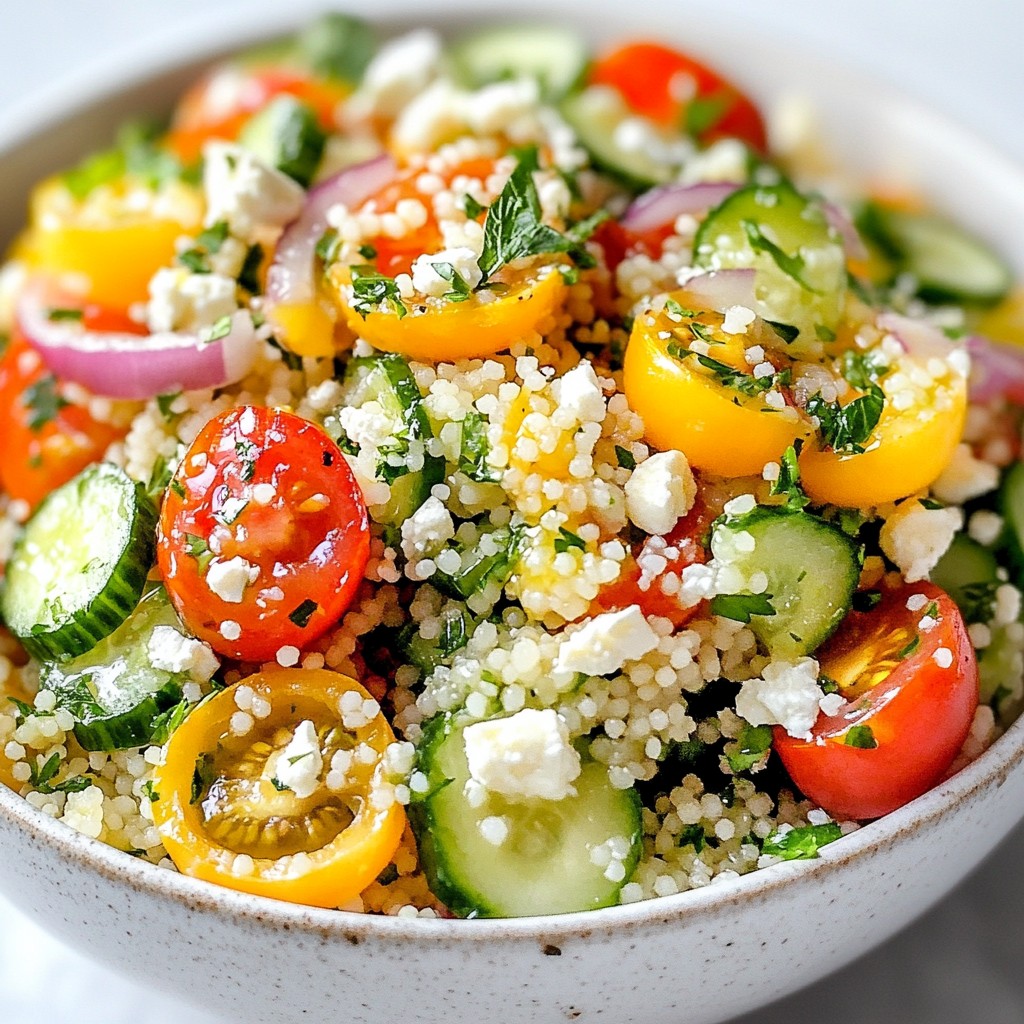
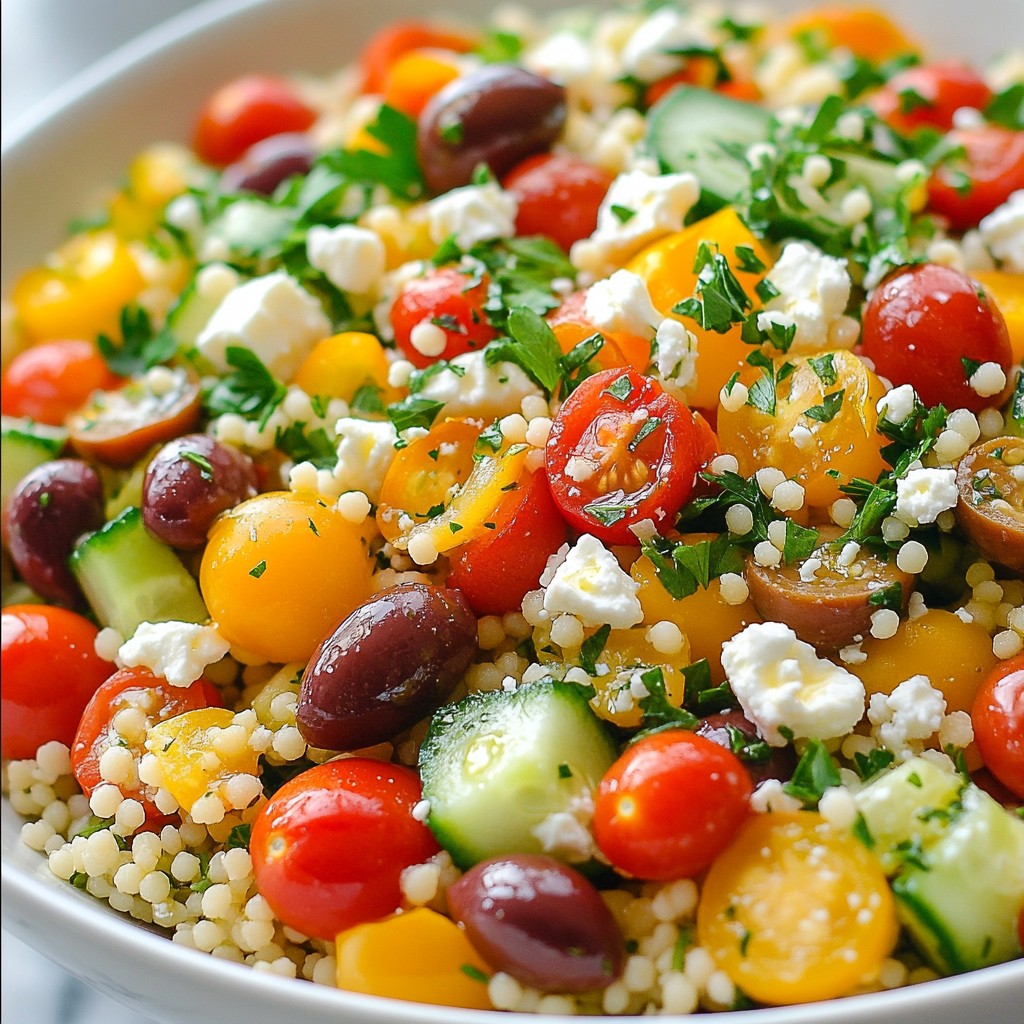
Looking for a fresh and flavorful dish? You’ve found it! This Mediterranean Couscous Salad is packed with taste and nutrients, making it perfect for any meal. I’ll guide you through simple steps, ingredient options, and tasty tips to elevate your cooking. Whether you’re a seasoned chef or a kitchen newbie, this recipe will impress. Let’s dive in and create a delightful salad that bursts with Mediterranean flair!
Why I Love This Recipe
- Fresh Ingredients: The combination of fresh vegetables and herbs adds vibrant flavors and nutrients, making every bite refreshing and wholesome.
- Quick & Easy: This salad comes together in just 30 minutes, making it an ideal choice for busy weeknights or last-minute gatherings.
- Versatile Dish: Perfect as a side dish or a light main course, it pairs beautifully with grilled meats or can be enjoyed on its own.
- Make-Ahead Friendly: The flavors improve with time, so you can prepare it in advance and let it chill in the fridge for a delicious ready-to-eat meal.
Ingredients
Complete Ingredients List
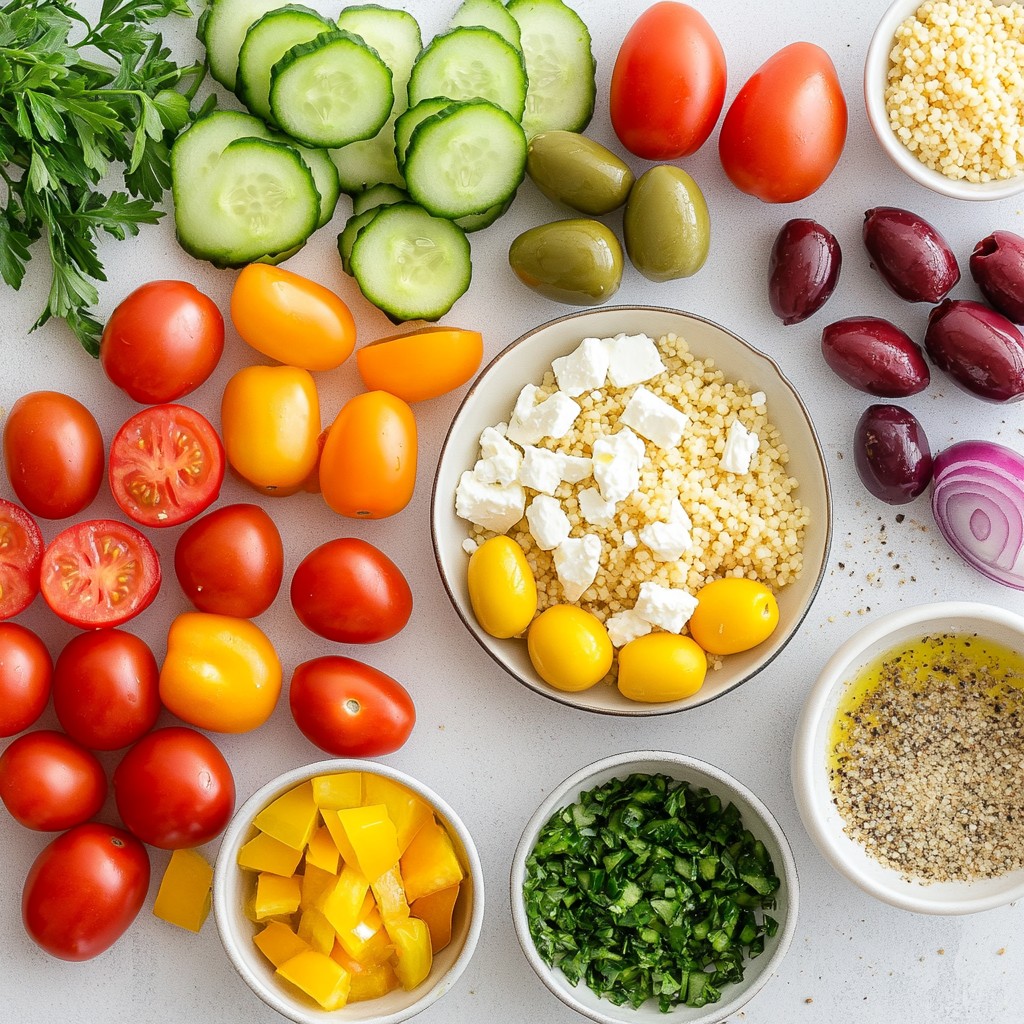
For a delightful Mediterranean Couscous Salad, gather these fresh ingredients:
- 1 cup whole wheat couscous
- 1 1/4 cups vegetable broth
- 1 cup cherry tomatoes, halved
- 1 cucumber, diced
- 1 bell pepper (red or yellow), diced
- 1/2 red onion, finely chopped
- 1/2 cup Kalamata olives, pitted and sliced
- 1/2 cup feta cheese, crumbled
- 1/4 cup fresh parsley, finely chopped
- 3 tablespoons extra virgin olive oil
- 2 tablespoons freshly squeezed lemon juice
- 1 teaspoon dried oregano
- Salt and freshly ground black pepper to taste
These ingredients create a vibrant salad packed with flavor.
Ingredient Substitutions
You can easily swap some ingredients. For a gluten-free option, use quinoa instead of couscous. If you dislike olives, try capers for a salty bite. Feta cheese can be replaced with goat cheese for a creamier texture. For a crunchy twist, add radishes or carrots. Feel free to mix and match to suit your taste.
Nutritional Information
This salad serves four and offers a healthy balance. Each serving contains about:
- Calories: 250
- Protein: 8g
- Carbohydrates: 35g
- Dietary Fiber: 5g
- Sugars: 3g
- Fats: 10g
- Saturated Fat: 3g
This dish is full of nutrients, making it a great choice for lunch or dinner.
Step-by-Step Instructions
Detailed Cooking Process
First, bring your vegetable broth to a boil in a medium saucepan. Once it boils, take it off the heat. Stir in 1 cup of whole wheat couscous. Cover the saucepan with a lid and let it sit for 5 minutes. This helps the couscous soak up the broth's flavor. After 5 minutes, fluff the couscous with a fork. This separates the grains and keeps it light. Set it aside to cool.
While the couscous cools, prepare your fresh veggies. In a large bowl, add:
- 1 cup cherry tomatoes, halved
- 1 cucumber, diced
- 1 bell pepper, diced (use red or yellow)
- 1/2 red onion, finely chopped
- 1/2 cup Kalamata olives, sliced
- 1/2 cup feta cheese, crumbled
Gently mix these ingredients together. Once your couscous is cool, add it to this bowl.
In a small bowl, whisk together:
- 3 tablespoons extra virgin olive oil
- 2 tablespoons lemon juice
- 1 teaspoon dried oregano
- Salt and pepper to taste
Drizzle this dressing over your salad. Toss everything gently to coat the ingredients well. Finally, fold in 1/4 cup of fresh parsley. This adds color and fresh flavor.
Timing for Each Step
- Boiling broth: 5 minutes
- Couscous resting: 5 minutes
- Mixing veggies: 5 minutes
- Dressing preparation: 2 minutes
- Tossing salad: 3 minutes
- Resting period before serving: 15 minutes
Total time from start to finish is about 30 minutes.
Final Mixing and Serving Instructions
After letting the salad rest for a minimum of 15 minutes, it is ready to serve. This time helps the flavors blend. Serve the salad in a large, shallow dish. Garnish with extra parsley and a few whole Kalamata olives for a nice touch. This salad tastes great chilled or at room temperature. Enjoy your fresh and colorful Mediterranean Couscous Salad!
Tips & Tricks
Best Practices for Cooking Couscous
To cook couscous well, start with the right ratio of broth to couscous. I use 1 1/4 cups of broth for every cup of couscous. This adds great flavor. Bring the broth to a boil before adding couscous. Once it boils, remove it from heat and stir in the couscous. Cover it tightly. Let it sit for five minutes. After that, use a fork to fluff it. This keeps the grains separate.
Flavor Enhancements
To boost flavor, consider adding more herbs and spices. Fresh basil or mint can add a nice twist. You might also try a pinch of red pepper flakes for heat. A little garlic powder can add depth. Experiment with different spices to find what you like best. These small changes can make a big difference.
Presentation Suggestions
Presentation matters, especially for salads. Serve your couscous salad in a large, shallow dish. This allows all the colors to shine. Use fresh parsley as a garnish. You can also add a few whole Kalamata olives on top. This enhances the look and adds a pop of color. Enjoy the beauty of your dish as much as the taste!
Pro Tips
- Use Fresh Herbs: Fresh parsley adds vibrant flavor and color to your salad. Consider adding mint or basil for an extra layer of freshness.
- Customize Your Veggies: Feel free to swap in your favorite vegetables like zucchini, carrots, or even artichokes to make the salad your own.
- Make It Ahead: This salad can be prepared a day in advance. Just store it in the refrigerator to let the flavors deepen even more.
- Serve with Protein: For a more filling meal, top the salad with grilled chicken, shrimp, or chickpeas for added protein.
Variations
Adding Proteins (chicken, chickpeas, etc.)
You can boost the protein in your Mediterranean couscous salad easily. Grilled chicken works well. Just slice it thin and toss it in. If you want a plant-based option, add chickpeas. They add good flavor and texture. You can use canned chickpeas for ease. Rinse and drain them before adding.
Seasonal Vegetable Options
Feel free to change the veggies based on the season. In spring, try adding peas or asparagus. Summer is perfect for zucchini or roasted bell peppers. In fall, use roasted butternut squash or kale. Winter can bring in hearty greens like spinach or even Brussels sprouts. This keeps the salad fresh and exciting.
Different Cheese Choices
Feta cheese adds a nice tang to the salad. However, you can try other cheeses, too. Goat cheese offers a creamy texture. For a sharper taste, use Parmesan. If you prefer a non-dairy option, try nutritional yeast for a cheesy flavor. Each cheese brings its own unique twist to your dish.
Storage Info
How to Store Leftovers
To store leftovers, place the salad in an airtight container. Make sure to cool it to room temperature first. This helps keep the flavors fresh. You can store it in the fridge for up to three days.
Freezing Tips
I do not recommend freezing this salad. The couscous and veggies may become mushy when thawed. If you need to freeze, try freezing just the couscous. Store it in a freezer bag, removing as much air as possible.
How Long It Lasts in the Fridge
This salad can last in the fridge for about three days. After that, the veggies lose their crunch. Always check for any off smells or changes in texture before eating. Enjoy your fresh Mediterranean Couscous Salad while it’s at its best!
FAQs
What is couscous made from?
Couscous is made from semolina wheat. It forms small granules when mixed with water and cooked. Whole wheat couscous is more nutritious than regular couscous. It has more fiber and protein. This adds great value to our Mediterranean Couscous Salad.
Can I make this salad ahead of time?
Yes, you can make this salad ahead of time! Prepare it a few hours or even a day before serving. This allows the flavors to blend together. Just store it in the fridge in an airtight container. It tastes even better after sitting for a while!
Is Mediterranean Couscous Salad gluten-free?
No, this salad is not gluten-free. Couscous contains wheat, which has gluten. If you need a gluten-free option, try using quinoa or rice instead. Both will give you a similar texture and are gluten-free. You can still enjoy a fresh and flavorful dish!
This article covered key aspects of making a Mediterranean Couscous Salad. We explored the complete ingredients list, substitutions, and nutritional facts. Then, I provided clear step-by-step instructions and cooking times. We discussed tips for best practices, flavor enhancements, and presentation ideas. Variations offered options for proteins, vegetables, and cheeses. Finally, I shared proper storage info and answered common questions.
Now, you’re ready to make this dish a success in your kitchen. Enjoy your cooking and the tasty results!