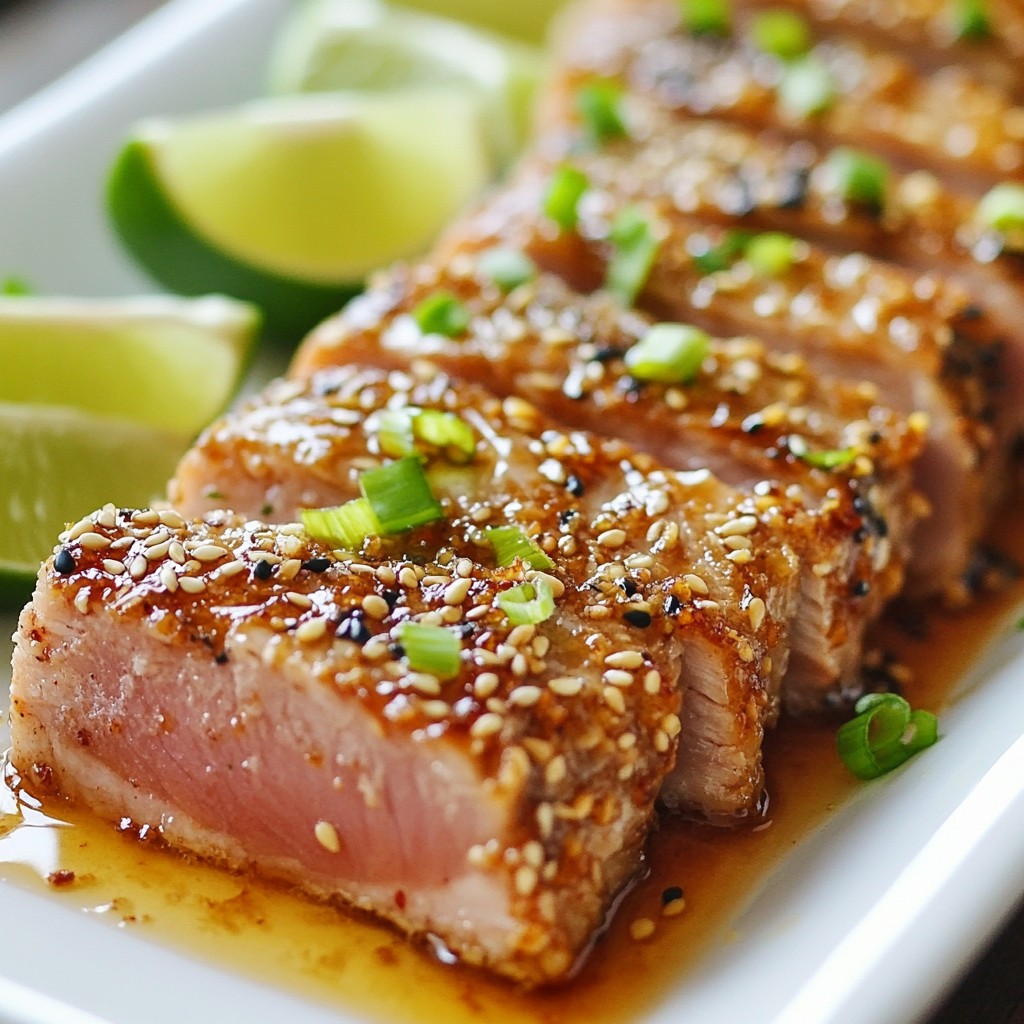
If you're looking for a delicious and healthy meal, sesame crusted tuna steaks are a great choice. This dish combines the rich taste of fresh tuna with the nutty crunch of sesame seeds. It's quick to make and perfect for dinner or lunch. I’ll walk you through easy steps to create this flavorful dish that will impress your family and friends. Ready to cook? Let’s dive in!
Why I Love This Recipe
- Fresh Ingredients: This recipe utilizes fresh tuna steaks, ensuring a delicious and vibrant flavor that is hard to beat.
- Quick and Easy: With a total preparation time of just 30 minutes, this dish is perfect for a weeknight dinner without sacrificing quality.
- Health Benefits: Packed with Omega-3 fatty acids, tuna is not only tasty but also a healthy choice for your diet.
- Visual Appeal: The contrasting colors of the sesame seeds and the vibrant presentation make this dish as pleasing to the eyes as it is to the palate.
Ingredients
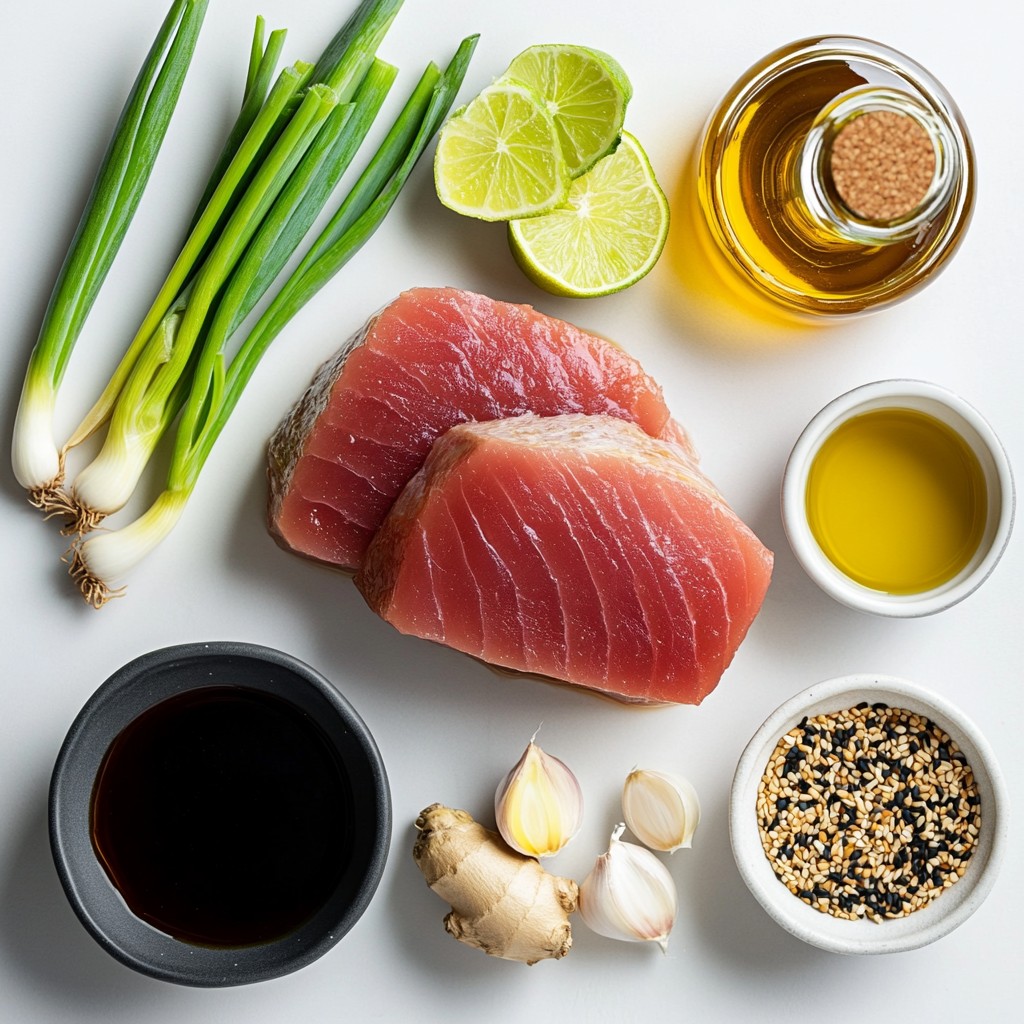
Fresh Tuna Steaks
For this dish, you need 2 fresh tuna steaks, each about 6 oz. Look for vibrant color and a firm texture. Fresh tuna is key for a great taste.
Sesame Seed Blend
You will use 1/4 cup mixed sesame seeds. A blend of white and black seeds adds a nice look and extra crunch. This mix enhances the flavor and texture of the tuna.
Marinade Components
The marinade is simple and delicious. You will need:
- 2 tablespoons soy sauce
- 1 tablespoon honey
- 1 teaspoon freshly grated ginger
- 1 teaspoon garlic powder
- 1 tablespoon olive oil
- Salt and pepper, to taste
These ingredients work together to give the tuna a rich flavor. The honey adds a touch of sweetness, while the ginger and garlic give it a warm kick.
To serve, slice 2 green onions thinly for garnish. Drizzle 1 tablespoon sesame oil over the finished plate and add 1 lime, cut into wedges. This adds freshness and brightness to your meal.
Step-by-Step Instructions
Preparing the Marinade
Start by mixing the marinade. In a small bowl, combine:
- 2 tablespoons soy sauce
- 1 tablespoon honey
- 1 teaspoon freshly grated ginger
- 1 teaspoon garlic powder
- 1 tablespoon olive oil
- A pinch of salt and pepper
Whisk these together until smooth. The marinade adds flavor to the tuna.
Marinating the Tuna Steaks
Next, take your fresh tuna steaks. Place them in a shallow dish. Pour the marinade over the steaks. Make sure they are fully coated. Cover the dish and let it sit in the fridge for 15-20 minutes. This step helps the flavors soak in.
Creating the Sesame Coating
Now, it’s time to coat the tuna. Spread a mix of white and black sesame seeds on a plate. Once the tuna has marinated, take the steaks out. Let the extra marinade drip off. Press each steak into the sesame seeds. Ensure both sides are fully covered.
Heating the Skillet
Heat up a non-stick skillet on medium-high heat. Add 1 tablespoon of sesame oil. Wait until the oil shimmers. This means it's hot and ready for cooking.
Searing the Tuna Steaks
Carefully place the sesame-coated tuna steaks in the hot skillet. Sear them for about 1-2 minutes on each side. If you like your tuna rare, this timing works well. Adjust the time if you prefer it more cooked.
Warming the Marinade
While the tuna cooks, warm the reserved marinade. Pour it into a small saucepan. Heat it gently over low heat. Let it simmer for about 2-3 minutes. This step enhances the flavors for serving.
Plating the Dish
After cooking, remove the tuna steaks from the skillet. Allow them to rest for a minute. Slice each steak into thick pieces. This makes them look inviting on the plate.
Serving Suggestions
Arrange the tuna slices on your plates. Drizzle the warmed marinade over them. Sprinkle sliced green onions on top for a crunchy contrast. Serve with lime wedges for a zesty kick. Enjoy this vibrant dish with a side of mixed greens or steamed rice for a complete meal.
Tips & Tricks
Achieving Perfect Sear
To get that nice, crusty sear, use a hot skillet. Heat the skillet over medium-high heat and add sesame oil. You want it to shimmer but not smoke. Place the tuna steaks in the pan gently. Cook them for just 1-2 minutes on each side. This keeps the center pink and tender.
Marinade Timing
Marinating the tuna is key for flavor. I suggest at least 15-20 minutes in the fridge. This time allows the soy sauce, honey, and ginger to soak in. If you have more time, feel free to let it sit for up to an hour. Just don’t go too long, or the fish can become mushy.
Cooking to Preferred Doneness
Tuna is best when cooked rare to medium-rare. The internal temperature should be around 120-130°F. Use a meat thermometer if you have one. If you like it more cooked, just add a minute or two to the cooking time. Always let the tuna rest for a minute after cooking. This step helps keep it juicy!
Pro Tips
- Quality Tuna: Always choose sushi-grade tuna for the best flavor and texture. Freshness is key to a delicious dish.
- Marinating Time: For an even deeper flavor, consider marinating the tuna for up to an hour, but do not exceed this time to avoid a mushy texture.
- Temperature Control: Ensure your skillet is hot before adding the tuna to achieve a perfect sear while keeping the inside rare.
- Serving Style: For a restaurant-style presentation, slice the tuna steaks just before serving and plate with a drizzle of marinade and a sprinkle of greens.
Variations
Different Tuna Cuts
You can use different cuts of tuna for this dish. While tuna steaks work best, you can try sashimi-grade tuna for a more delicate bite. Other cuts, like tuna belly, offer a richer flavor. Each cut brings its unique taste and texture, so choose what you like best.
Flavor Infusions
Adding extra flavor to your tuna is easy. You can mix in citrus juice, like lemon or orange, for a zesty kick. Fresh herbs, like cilantro or basil, also add a fresh note. Consider adding chili flakes for a spicy twist. Experimenting with flavors can make each meal unique and exciting.
Alternate Coating Options
While sesame seeds are the star, you can switch things up. Try using crushed nuts, like almonds or pistachios, for a crunchy crust. Panko breadcrumbs can add extra texture too. For a twist, coat the tuna in coconut flakes for a tropical flair. Each option can change the dish while keeping it delicious.
Storage Info
Storing Leftovers
After cooking, let the tuna cool down. Place it in an airtight container. Store it in the fridge. It will stay good for up to 2 days. I like to keep the leftover marinade separate. This helps to keep the tuna fresh.
Reheating Instructions
To reheat, use a skillet over low heat. Add a splash of olive oil to the pan. Heat each piece for about 1-2 minutes on each side. This keeps the tuna moist and tasty. Avoid using the microwave. It can dry out the fish.
Freezing Guidelines
If you want to freeze the tuna, wrap it tightly in plastic wrap. Then place it in a freezer bag. It can last for up to 3 months. When you're ready to eat, thaw it overnight in the fridge. Reheat gently to keep its flavor and texture.
FAQs
How should I select fresh tuna steaks?
Choose tuna steaks that are bright in color. Fresh tuna should look deep red or pink. Smell the fish; it should have a clean ocean scent, not a strong fishy smell. Look for firmness; fresh tuna feels solid when pressed. Avoid any steaks with brown or dull spots.
Can I make this recipe without sesame seeds?
Yes, you can skip the sesame seeds. If you want a different texture, try using crushed nuts or breadcrumbs. You can also sear the tuna without any coating. It will still taste great with the marinade and warm sauce.
What are the best sides to serve with sesame crusted tuna steaks?
Serve your tuna with steamed rice or quinoa for a hearty meal. A fresh salad with mixed greens adds crunch. You can also choose sautéed vegetables, like broccoli or snap peas. Lime wedges give a zesty kick that pairs well.
How do I know if my tuna is cooked sufficiently?
For rare tuna, sear it for 1-2 minutes on each side. The inside should still be pink. If you prefer medium, cook it for about 3 minutes on each side. Use a meat thermometer; 125°F is rare, while 135°F is medium.
Is this recipe gluten-free?
Yes, this recipe can be gluten-free. Use gluten-free soy sauce or tamari instead of regular soy sauce. Make sure the rest of your ingredients are also gluten-free. This way, everyone can enjoy this tasty dish!
This blog post has covered how to make sesame-crusted tuna steaks. We discussed fresh tuna, marinade ingredients, and the steps to cook it perfectly. You learned tips for a great sear and how to store leftovers. Experimenting with different cuts and flavors can bring fun changes to the dish. Enjoy your cooking journey, and don’t hesitate to try new ideas. Cooking can be simple and tasty!