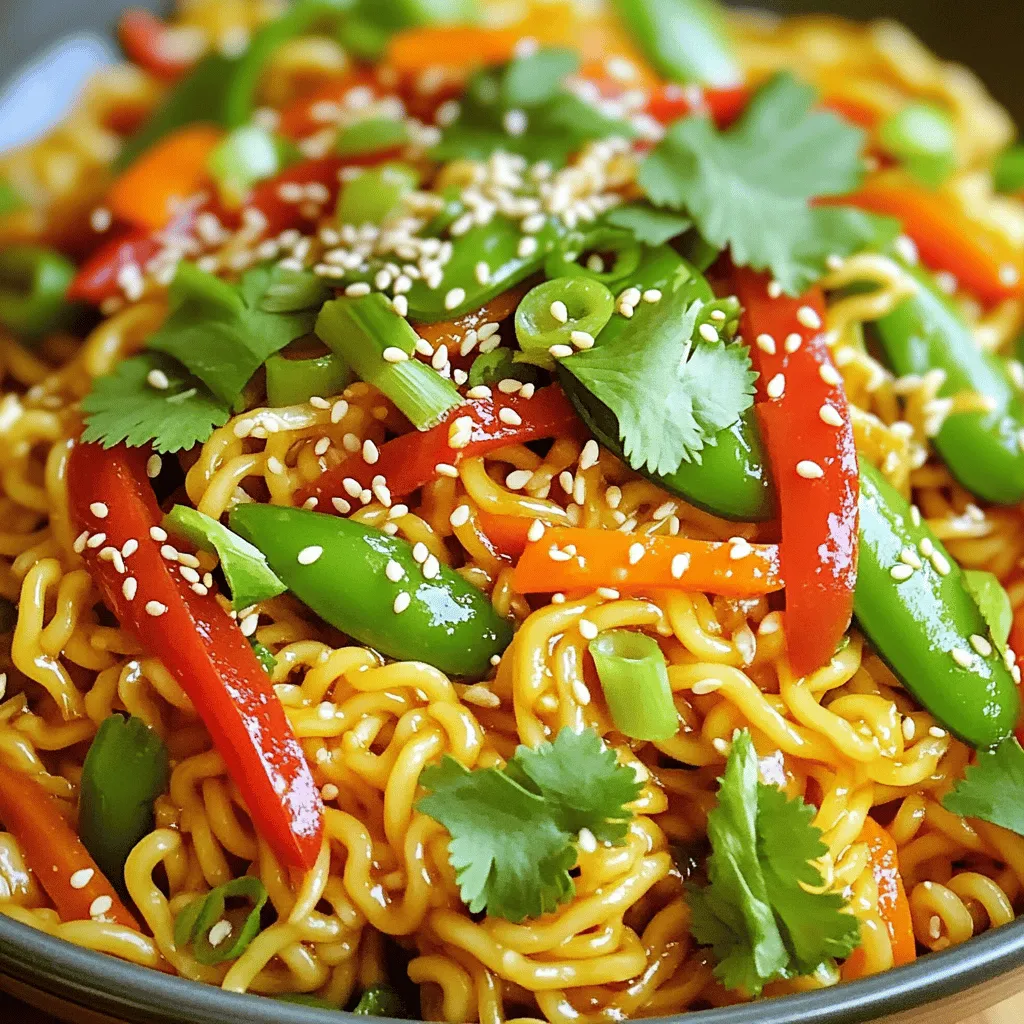
Craving a quick meal that’s both spicy and satisfying? This Spicy Sesame Ramen Stir-Up is just the ticket! With tender noodles, crisp veggies, and a kick of chili paste, you’ll whip up a delicious dish in no time. Whether you’re an expert cook or a beginner, this recipe packs big flavor with simple steps. Let’s dive right in and make your kitchen the next best ramen spot!
Ingredients
Main Ingredients
– 200g ramen noodles
– 2 tablespoons sesame oil
– 1 tablespoon chili paste
Vegetables
– 1 red bell pepper, thinly sliced
– 1 cup snap peas, ends trimmed
– 1 large carrot, peeled and julienned
– 3 green onions, finely chopped
Flavor Enhancers
– 2 cloves garlic, minced
– 1 tablespoon fresh ginger, grated
– 2 tablespoons soy sauce
– 1 tablespoon rice vinegar
– 1 tablespoon toasted sesame seeds
– Fresh cilantro leaves for garnish
This dish comes together quickly with fresh, vibrant ingredients. The ramen noodles form the base, while sesame oil adds depth. Chili paste gives a kick, so adjust it to your taste.
Colorful veggies brighten the dish. Red bell pepper adds crunch, and snap peas bring a sweet snap. The carrot offers sweetness and a lovely texture. Green onions finish it off with their mild bite.
Flavor enhancers like garlic and ginger add warmth. Soy sauce and rice vinegar balance the flavors. Toasted sesame seeds give a nutty crunch. Finally, cilantro adds a fresh touch. Each ingredient plays a role in creating a delicious Spicy Sesame Ramen Stir-Up.
Step-by-Step Instructions
Preparing the Noodles
First, cook the ramen noodles as the package says. Boil water and add the noodles. Cook them for about 3-4 minutes or until tender. Once done, drain them well. Set them aside in a large bowl. Make sure they don’t stick together.
Stir-Frying Vegetables
Next, grab a large skillet or wok. Pour in the sesame oil. Heat it over medium flame until it shimmers. Now, add the minced garlic and grated ginger. Stir them for about 30 seconds. They should smell great but not burn. Then, add the sliced red bell pepper, snap peas, and julienned carrot. Stir-fry these colorful veggies for around 3-4 minutes. They should be bright and tender-crisp.
Combining Ingredients
Once your veggies are ready, it’s time to add flavor. Pour in the chili paste, soy sauce, and rice vinegar. Stir well to coat all the vegetables. Now, gently add the cooked ramen noodles. Toss everything together carefully for about 2 minutes. Make sure the noodles heat through and mix well with the sauce.
Final Touches
To finish, sprinkle toasted sesame seeds and the white parts of the green onions on top. Toss lightly to mix. Time to serve! Plate the spicy ramen stir-up in bowls. Garnish each bowl with fresh cilantro leaves and the green parts of the green onions. Enjoy your vibrant meal!
Tips & Tricks
Perfecting the Flavor
– Adjusting chili paste for spice level: Start with one tablespoon of chili paste. If you want it spicier, add more. This lets you control the heat. You can always add, but you can’t take it away.
– Using freshly grated ginger vs. jarred: Fresh ginger gives a bright taste. It adds a zing that jarred ginger can’t match. Use a microplane to grate it fine. This ensures an even mix in your dish.
Serving Suggestions
– Presentation recommendations: Serve the ramen in shallow bowls. This makes it look fancy. Drizzle a little sesame oil on top for shine. Sprinkle extra sesame seeds for a nice touch.
– Pairing options with drinks or sides: Try pairing with a light beer or iced tea. These drinks balance the heat well. Serve with spring rolls or a salad for added crunch.
Time-Saving Tips
– Prepping ingredients ahead of time: Chop your veggies the night before. Store them in the fridge. This makes cooking faster. You can enjoy your meal sooner!
– Choosing quick-cooking vegetables: Snap peas and bell peppers cook fast. They keep their color and crunch. This adds brightness to your bowl without slowing you down.

Variations
Protein Additions
You can make your Spicy Sesame Ramen Stir-Up even better by adding protein. I recommend three great options:
– Chicken: Use cooked, diced chicken for a hearty meal.
– Tofu: For a vegetarian choice, try firm tofu. Cut it into cubes and pan-fry until golden.
– Shrimp: Add shrimp for a quick and tasty boost. Cook them until pink and tender.
Each of these proteins brings a new flavor and texture to your dish.
Alternative Vegetables
Feel free to swap in different veggies based on your taste. Here are some great alternatives:
– Bok Choy: This leafy green adds a nice crunch and is very nutritious.
– Mushrooms: Sliced shiitake or button mushrooms give an earthy flavor.
These options keep your ramen fresh and exciting. You can mix and match as you like!
Dietary Adjustments
If you have dietary needs, don’t worry! You can easily adjust this recipe:
– Gluten-Free Noodles: Use rice noodles or gluten-free ramen. They work well in this recipe.
– Vegetarian or Vegan Alternatives: Replace the soy sauce with tamari for a gluten-free option. Use plant-based proteins like tofu or chickpeas.
With these variations, you can make this dish fit your needs while keeping it delicious!
Storage Info
Refrigeration
To store leftovers, place the ramen in an airtight container. Let the dish cool first. The spicy sesame ramen stays fresh in the fridge for up to three days. Just remember to keep the ingredients mixed well to prevent sogginess.
Reheating Instructions
When reheating, use a skillet over low heat. Add a splash of water or sesame oil to keep it moist. Stir frequently to maintain the noodles’ texture. This way, the ramen stays tasty and does not dry out.
Freezing Guidelines
You can freeze this dish, but the texture may change. If you choose to freeze it, place the cooled ramen in a freezer-safe container. Use within one month for the best taste. When ready to eat, thaw it overnight in the fridge and reheat as mentioned before.
FAQs
What can I substitute for ramen noodles?
You can use several types of noodles or grains instead of ramen. Try udon or soba noodles; they have great texture. Rice noodles work well, too. For a low-carb option, spiralized zucchini or shirataki noodles are good choices. Each option gives a different taste and feel.
How spicy is this dish?
The spice level can vary based on the chili paste you use. Start with one tablespoon for mild heat. If you like it spicier, add more to taste. You can also toss in red pepper flakes for extra kick. Spice is fun to adjust!
Can I make this recipe ahead of time?
Yes, you can prep this dish ahead. Cook the noodles and store them in a fridge. Chop the veggies and keep them in an airtight container. Mix the sauce and store it separately. When ready to eat, stir-fry everything together. It tastes fresh and quick!
What is the origin of this dish?
Ramen has roots in China but became famous in Japan. This dish shows how noodles can connect cultures. Many people enjoy ramen for its comforting taste and warm broth. Each region adds its twist, making it a fun dish to explore!
You now have a great ramen dish ready to enjoy. We covered key ingredients, step-by-step instructions, and tips to enhance flavor. Remember to choose your vegetables and proteins based on your taste. Keep leftovers fresh through careful storage methods. Don’t hesitate to experiment with variations to make it your own. Enjoy your cooking journey and savor every bite of your delicious creation.