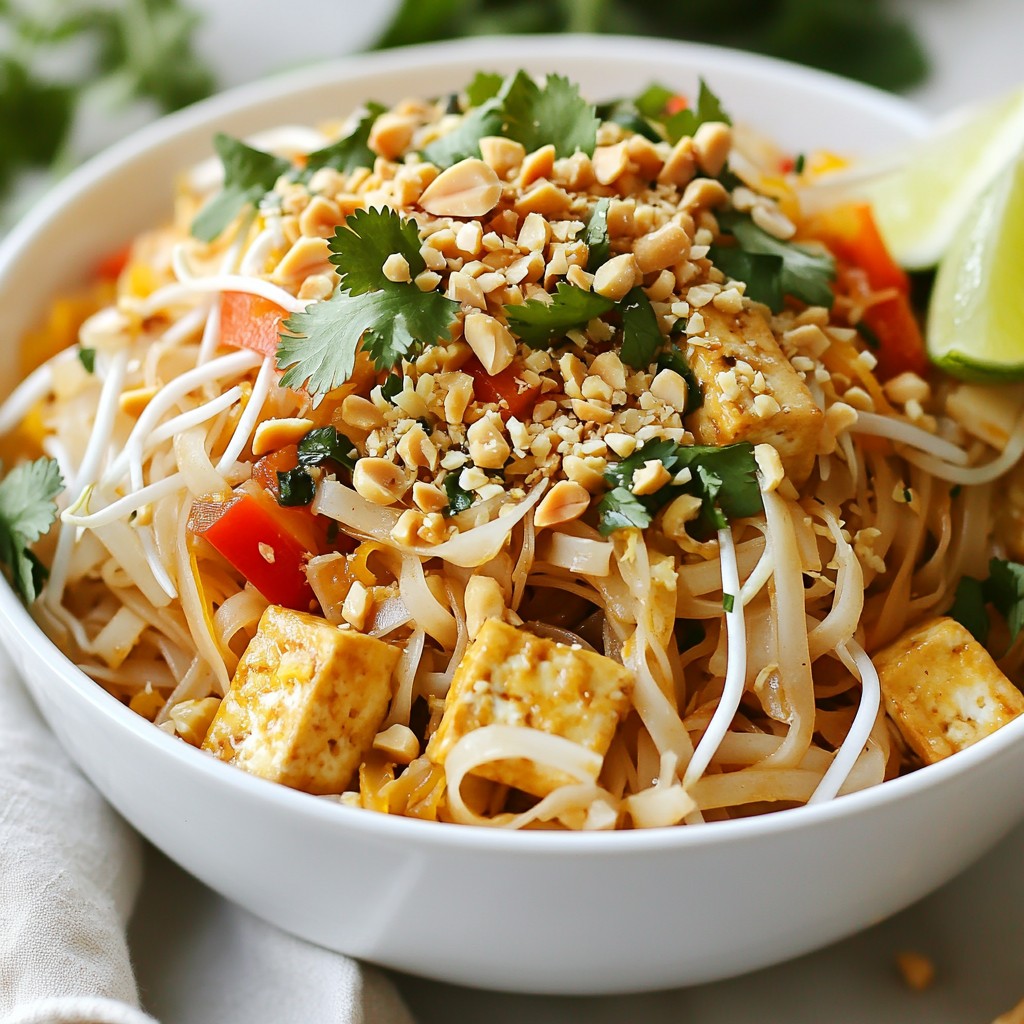
If you're craving a dish that bursts with flavor and freshness, Vegan Pad Thai Noodles are a must-try. This vibrant recipe combines chewy rice noodles, crispy tofu, and crunchy veggies—all drizzled in a savory sauce. Perfect for a quick weeknight dinner or meal prep, it’s simple yet satisfying. Follow along as I guide you through each step to make this delicious and wholesome dish!
Why I Love This Recipe
- Quick and Easy: This Vegan Pad Thai can be prepared in just 30 minutes, making it a perfect weeknight dinner option.
- Flavor-Packed: The combination of tamarind, peanut butter, and lime juice creates a deliciously tangy and nutty sauce that elevates the dish.
- Customizable: You can easily add or substitute vegetables based on your preferences or what you have on hand.
- Healthy and Satisfying: This dish is not only plant-based but also packed with protein from tofu and nutrients from fresh vegetables.
Ingredients
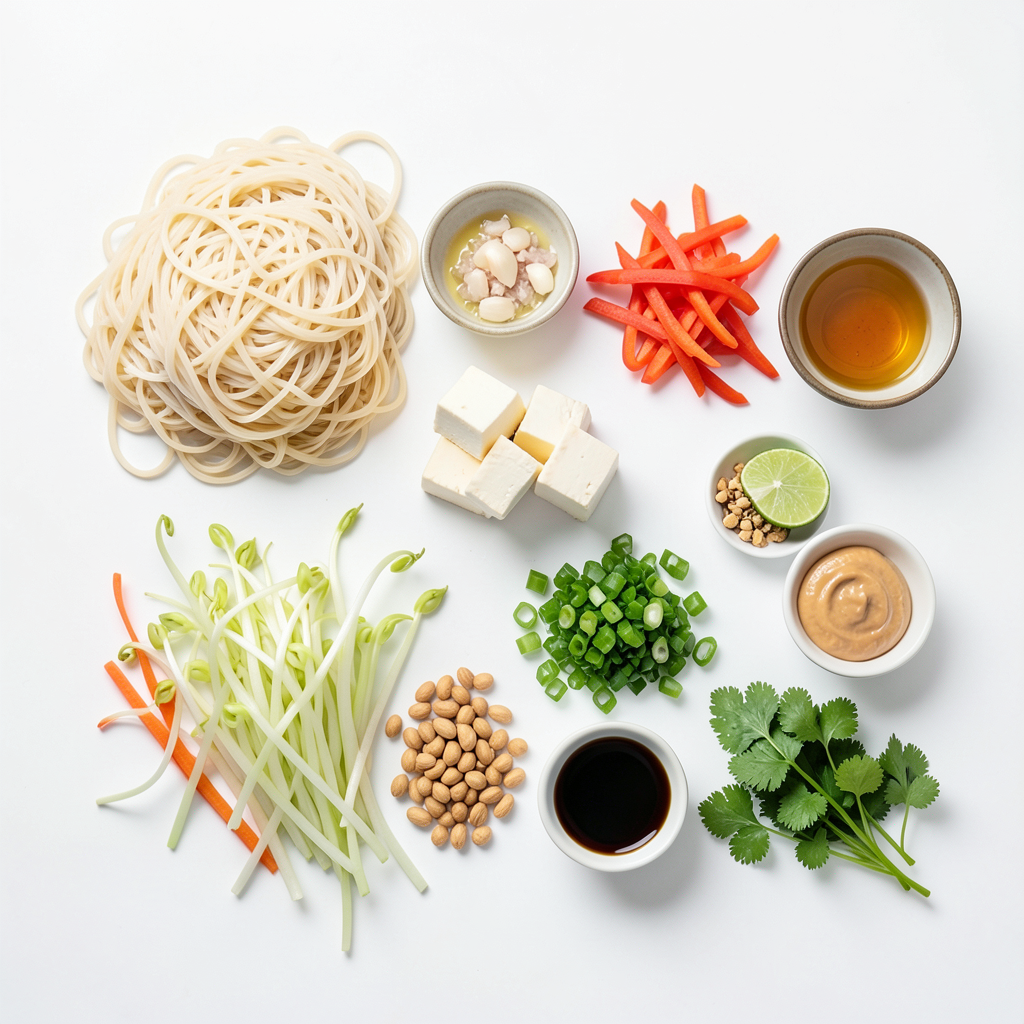
List of Ingredients
- 8 oz rice noodles
- 1 tablespoon vegetable oil
- 2 cloves garlic, finely minced
- 1 cup firm tofu, cut into small cubes
- 2 cups fresh bean sprouts
- 1 red bell pepper, cut into thin strips (julienned)
- 2 green onions, chopped into bite-sized pieces
- 1/4 cup roasted peanuts, coarsely crushed
- 1 tablespoon soy sauce
- 1 tablespoon creamy peanut butter
- 2 tablespoons tamarind paste
- 1 tablespoon pure maple syrup
- Juice of 1 fresh lime
- Fresh cilantro leaves, for garnish
- Lime wedges, for serving
- Salt and pepper, to taste
I love using fresh, vibrant ingredients to make this Vegan Pad Thai. The rice noodles are the heart of this dish. They soak up all the flavors. Tofu adds protein and a wonderful texture. I prefer firm tofu because it holds its shape well.
The fresh bean sprouts give a nice crunch. Red bell pepper adds sweetness and color. Green onions provide a mild onion flavor. Roasted peanuts bring richness and crunch to each bite.
For the sauce, I use soy sauce, creamy peanut butter, and tamarind paste. This mix creates a balance of salty, sweet, and tangy notes. Pure maple syrup adds a touch of sweetness, while lime juice gives a refreshing zing.
Garnishing with fresh cilantro and lime wedges is key. The cilantro adds a burst of freshness, and the lime lets you control the tartness. Salt and pepper enhance all the flavors, making each bite delightful.
Gather these ingredients, and you're ready to make a dish that bursts with flavor and color!
Step-by-Step Instructions
Preparing the Noodles
1. Cooking rice noodles: Begin by boiling water in a pot. Add 8 oz of rice noodles and cook them according to the package instructions. Usually, this takes about 5-7 minutes.
2. Rinsing and setting aside: Once the noodles are soft, drain them. Rinse the noodles under cold water. This stops the cooking. Set the noodles aside in a large bowl.
Cooking the Tofu
1. Sautéing garlic: In a large skillet or wok, heat 1 tablespoon of vegetable oil over medium heat. Add 2 cloves of finely minced garlic. Sauté for about 30 seconds, until you smell the garlic. Be careful not to burn it.
2. Adding and browning tofu: Now, gently add 1 cup of firm tofu, cut into small cubes. Cook the tofu for 5-7 minutes. Stir it occasionally until it is golden brown and crispy on all sides.
Combining Ingredients
1. Incorporating vegetables: Stir in 1 red bell pepper, cut into thin strips, and cook for 3-4 minutes. The peppers should be soft but still vibrant.
2. Mixing noodles with sauce: Add the prepared rice noodles, 2 cups of fresh bean sprouts, and 2 chopped green onions to the skillet. Toss everything gently to mix well. In a small bowl, whisk together 1 tablespoon soy sauce, 1 tablespoon creamy peanut butter, 2 tablespoons tamarind paste, 1 tablespoon pure maple syrup, and the juice of 1 lime. Pour this sauce over the noodle mixture. Stir until everything is well coated. Heat through for 2-3 minutes. Taste, then add salt and pepper as needed.
Tips & Tricks
Cooking Tips
To get the best tofu texture, start with firm tofu. Press it for about 15 minutes to remove extra water. Cut it into small cubes. This helps it get crispy.
For the vegetables, timing is key. Add bell peppers after the tofu browns. Cook them for about 3-4 minutes. They should be soft but still bright. This keeps the dish colorful and fresh.
Flavor Enhancements
To boost flavor, consider adding chili flakes or fresh basil. A little spice can wake up the dish. Fresh herbs like cilantro add a nice touch, too.
For sauces, you can use hoisin sauce or even sriracha. These can change the taste profile. Feel free to mix and match until you find your favorite blend.
Plating Suggestions
When serving, garnish with crushed peanuts and cilantro. This adds crunch and color. Place lime wedges on the side. Guests can squeeze lime juice for a zesty kick. It makes the dish more fun and interactive!
Pro Tips
- Use Fresh Ingredients: For the best flavor, use fresh vegetables and herbs. This will elevate the taste of your Pad Thai and make it more vibrant.
- Press the Tofu: Before cooking, press the tofu to remove excess moisture. This helps the tofu to achieve a better texture and absorb more flavors from the sauce.
- Customize the Spice: If you like a bit of heat, consider adding some red pepper flakes or sriracha to the sauce for an extra kick.
- Let it Rest: Allow the cooked noodles to sit for a few minutes before serving. This helps the flavors to meld and the noodles to firm up slightly.
Variations
Protein Alternatives
You can use tempeh or seitan for a different texture. Both options add a nice bite. Tempeh has a nutty taste and seitan is chewy. They both soak up flavors well. For a simpler choice, try legumes like chickpeas or black beans. They are easy to cook and full of protein.
Vegetable Substitutions
Feel free to add other veggies to your pad Thai. Zucchini, carrots, or snap peas work well. Think about using seasonal produce, too. In winter, add broccoli or kale. In summer, go for fresh beans or bell peppers. More colors means more flavor and nutrients.
Sauce Modifications
You can switch up the nut butter in the sauce. Almond or cashew butter can be tasty alternatives. If you like it sweeter, add more maple syrup. To make it tangier, squeeze in more lime juice. Adjust these flavors to suit your taste.
Storage Info
Storing Leftovers
To store your Vegan Pad Thai noodles, use an airtight container. Glass or plastic containers work well. Place the cooled noodles in the container. For best taste, eat leftovers within three days. If you cannot finish them, freeze for up to a month. Be sure to label your containers with the date.
Reheating Instructions
To reheat, use a skillet or microwave. If using a skillet, add a small splash of water. Heat over low until warm, stirring gently. If using a microwave, cover the bowl. Heat in short bursts, stirring in between. This keeps the noodles soft and tasty. Avoid overheating to prevent a dry texture.
FAQs
Common Questions
Can I make Vegan Pad Thai gluten-free? Yes, you can. Use gluten-free rice noodles instead of regular ones. Check the soy sauce for gluten-free options, like tamari. This way, you enjoy the same tasty dish without gluten.
What are the health benefits of vegan ingredients? Vegan ingredients are rich in vitamins, minerals, and fiber. They often contain less saturated fat than meat. Foods like tofu and veggies can improve heart health and boost energy levels.
How do I make a spicier version of Vegan Pad Thai? To spice it up, add red pepper flakes or fresh chili peppers. You can also drizzle sriracha on top before serving. Adjust the spice based on your taste.
Recipe Substitutions
Can I use other types of noodles? You can try other noodles, like soba or udon. Just ensure they cook well and match the sauce. Each type adds a unique texture and flavor.
What can I substitute for tamarind paste? If you lack tamarind paste, mix lime juice and brown sugar. This combo gives a sweet and tangy taste similar to tamarind.
How to replace maple syrup in the sauce? You can swap maple syrup for agave syrup or brown sugar. Both options provide sweetness, keeping the balance in your dish.
Serving Size Queries
Is this recipe suitable for meal prep? Yes, this recipe is great for meal prep! You can store it in the fridge for several days. Just reheat when you are ready to eat.
How many servings can I get from this recipe? This recipe serves four people. You can easily adjust the amounts if you need more.
Can I double this recipe? Absolutely! Doubling the recipe is simple. Just be sure to use a larger skillet to cook everything evenly.
This blog post covered a simple Vegan Pad Thai recipe. We looked at key ingredients, cooking steps, and useful tips. You can mix different proteins and veggies to suit your taste. Proper storage keeps leftovers fresh, and we answered common questions too. Making this dish is easy and fun. You now hold the tools to enjoy a tasty meal that fits your lifestyle. Dive into cooking and enjoy every bite of your delicious Vegan Pad Thai!